

Understanding Derivatives in Finance
📈 Understand derivatives in finance: their types, purposes, risks & role in risk management, trading strategies & regulations in Indian & global markets.
Edited By
Charlotte Bennett
Apple Inc. stands among the most valuable technology companies globally, and its market capitalisation offers a clear measure of this stature. Market capitalisation, or market cap, is simply the total value of a company's outstanding shares. It provides investors and analysts a quick snapshot of a company's size and market worth.
For example, when Apple's stock price rises, its market cap climbs correspondingly, reflecting increased investor confidence and company growth. In 2023, Apple slipped past the $3 trillion mark for the first time, a milestone few companies have achieved worldwide.
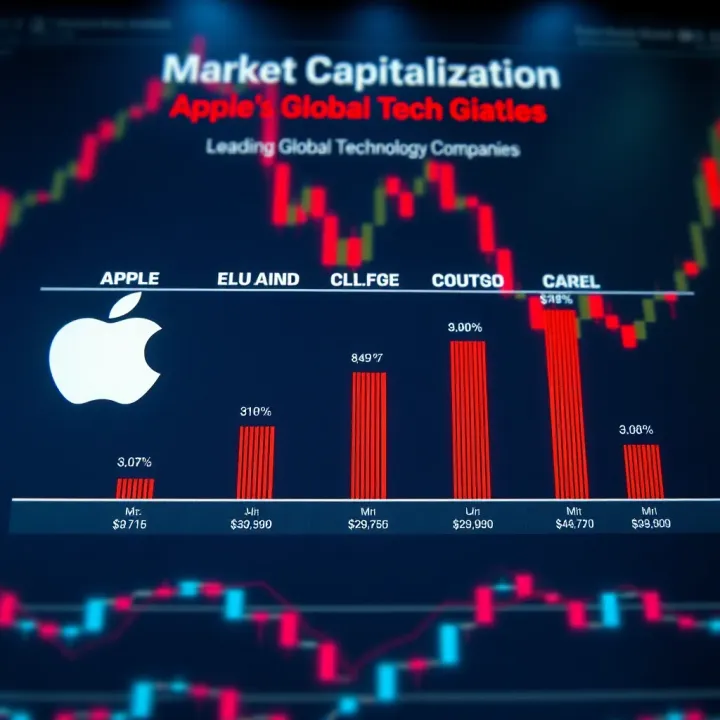
Market capitalisation isn’t just a number—it signals the market’s belief about a company’s future prospects and risk profile.
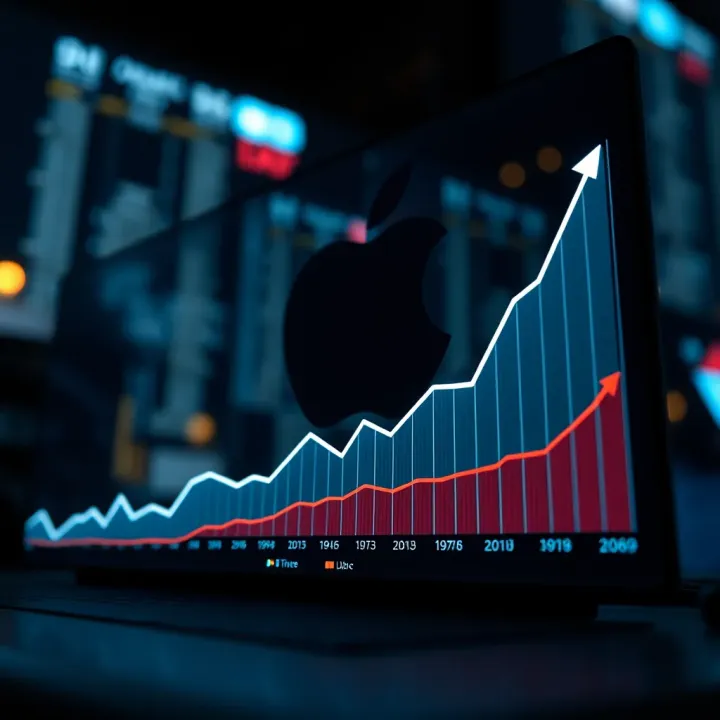
Understanding Apple's market cap involves looking beyond the share price to factors that influence valuation:
Revenue and Profitability: Strong sales and growing profit margins boost market confidence.
Product Innovation: New launches, like the recent mixed reality headset, can drive market enthusiasm.
Global Supply Chain: Smooth operations impact cost and delivery reliability.
Investor Sentiment: Broader market trends and geopolitical events also sway valuations.
Tracking Apple's market cap growth over time reveals how technological advances, shifting consumer preferences, and economic cycles affect the company’s perceived value. Indian investors following Apple through international brokerage platforms need to weigh such factors carefully before investing.
Moreover, comparing Apple’s market cap with other giants like Microsoft, Amazon, or Tata Consultancy Services (TCS) helps gauge relative strength in different sectors and regions. These comparisons assist in portfolio diversification and risk assessment.
This overview frames market capitalisation as an essential tool to understand Apple's financial standing, helping investors make informed decisions and grasp the wider implications for the tech industry globally and within India.
Market capitalisation, or market cap, is a key indicator to understand a company’s size and value in the stock market. For investors and analysts, knowing the market cap helps gauge Apple's position relative to other firms and assess risk and growth potential. It reflects what the market collectively thinks a company is worth based on its current share price.
Market capitalisation is the total market value of a company’s outstanding shares. Essentially, it tells you how much it would cost to buy all shares in the company at the current market price. For Apple, market cap summarises the company’s worth as perceived by investors rather than its accounting book value. This metric offers a snapshot of company size and investor sentiment.
The basic formula for market capitalisation is:
Market Capitalisation = Total Number of Outstanding Shares × Current Share Price
Consider Apple: If it has around 16.4 billion shares outstanding, and the current share price is ₹1,50,000 (just an example), then Apple's market cap would be approximately ₹24,60,000 crore. These figures fluctuate every [trading](/articles/understanding-qutex-trading-guide/) day, reflecting market conditions. Tracking market cap over time helps investors identify growth trajectories and market confidence.

### Limitations of Market Capitalisation as a Metric

While market cap offers valuable insight, it has shortcomings. It doesn't account for a company’s debt, cash reserves, or operational efficiency. For instance, two companies with the same market cap can differ greatly in financial health. Moreover, share price volatility can make market cap swing widely in short periods without underlying business changes. Finally, market cap alone cannot show intrinsic company value or future potential. Investors should combine it with other financial indicators for a better picture.

> Market capitalisation provides a quick gauge of a company’s size, but relying on it solely can be misleading without considering other financial factors.

[Understanding](/articles/understanding-derivatives-finance/) what market capitalisation means and how it is calculated lays the groundwork for deeper analysis of Apple’s market journey and investment value. It helps you see where Apple stands today and how stock market perceptions shape its valuation.

## Evolution of Apple's Market Capitalisation Over the Years

Tracking Apple's market capitalisation over time reveals how the company's value has responded to innovation, market dynamics, and investor sentiment. This evolution is essential for investors and analysts alike, as it helps understand the company's growth trajectory, potential future trends, and the risks involved.

### Early Growth and Milestones

Apple's journey from a small startup in the 1970s to a tech juggernaut began with milestones like the launch of the Apple II in 1977 and the Macintosh in 1984. Its initial public offering (IPO) in 1980 was a landmark event, setting the stage for rapid expansion. During the 1990s, the company faced challenges that reflected in a fluctuating market cap, affected by product missteps and competition.

However, the return of Steve Jobs in 1997 marked a turning point. With the introduction of the iMac and later the iPod, Apple's market capitalisation gained steady momentum. For instance, by 2001, Apple’s market cap was still below ₹10,000 crore but started climbing steadily as consumer demand grew.

### Reaching the ₹ Lakh Crore Mark and Beyond

Apple crossed the ₹1 lakh crore market capitalisation in the early 2010s, coinciding with the global success of the iPhone and the emergence of services like the App Store. This milestone reflected not just sales growth but also investor confidence in Apple's ecosystem and future potential.

The company's rise past this landmark was driven by consistent revenue growth, expanding global demand, and diversification into wearables and services. For [Indian](/articles/understanding-derv-fuel-india/) investors, this period highlighted the impact of flagship products on valuation amidst a growing appetite for premium technology.

### Recent Market Cap Fluctuations and Trends

Apple's market capitalisation has seen notable fluctuations, especially due to global economic shifts and sector rotations. For example, geopolitical tensions and inflation fears caused dips in 2022 and parts of 2023. On the other hand, strong quarterly earnings and product launches often sparked quick rebounds.

Investors tracking Apple should note such volatility tied to broader market conditions, regulatory concerns, and supply chain challenges. Despite fluctuations, Apple reached a historic valuation above ₹1,50 lakh crore, making it one of the most valuable companies worldwide.

> Apple's market cap evolution underscores the importance of understanding external and internal factors shaping a stock's valuation over time.

**In summary:** Knowing how Apple's market capitalisation has changed helps investors assess trends, evaluate risks, and make informed decisions based on the company’s historical performance and market environment.

## Key Drivers Behind Apple's Market Capitalisation

Apple’s impressive market capitalisation rests on several critical factors that sustain and grow its valuation in the stock market. Understanding these drivers helps investors and analysts gauge the company’s ability to maintain its market lead and the risks involved.

### Product Innovation and Consumer Demand

Product innovation has consistently pushed Apple's market value upwards. The company’s knack for launching products that resonate with consumer needs creates a loyal customer base eager for the next big thing. For example, the iPhone revolutionised the smartphone market, setting Apple apart from competitors. More recent launches like the Apple Watch and AirPods appeal not just technologically but also as lifestyle accessories. This demand-driven innovation ensures steady revenue streams and helps maintain a premium brand image, crucial for sustaining high market capitalisation.

### Revenue Streams and Profit Margins

Apple’s market cap also benefits from its diverse revenue streams and strong profit margins. Beyond hardware sales, services such as the App Store, iCloud, and Apple Music contribute significantly to overall income. These services usually command higher margins compared to physical products, boosting profitability.

The healthy margins on iPhones and MacBooks stem from efficient supply chain management and brand premium. For instance, despite global chip shortages affecting tech companies, Apple maintained strong margins through judicious component sourcing and effective pricing strategies. This financial robustness reassures investors of consistent returns.

### Stock Market Perception and Investor Confidence

Investor confidence plays a key role in driving Apple’s market cap. The company's ability to deliver quarterly earnings that meet or beat expectations shapes market perception positively. Institutional investors and mutual funds in India and globally often view Apple as a safe bet, especially during market uncertainty.

Analysts’ recommendations and market sentiment influence share prices daily. For example, when Apple announced robust earnings in recent quarters despite challenging economic conditions, the stock price reflected this resilience. This stock market perception is often as important as fundamentals because it influences buying and selling volumes, directly affecting market capitalisation.

> Apple's market capitalisation reflects not only its tangible assets but the market's faith in its future potential, backed by innovation, financial strength, and investor trust.

Together, these drivers paint a complete picture of why Apple commands such a high market value, which in turn informs investment decisions by offering insights into the company’s sustainability and growth prospects.

## Comparing Apple's Market Capitalisation with Global Technology Giants

Understanding Apple's market capitalisation in isolation provides some insight, but comparing it with other global technology leaders like Microsoft, Amazon, and Google reveals much more. This comparison highlights market trends, sector dynamics, and investor sentiment that influence valuations. It helps investors gauge how Apple stands against its peers and assess risks and opportunities relative to the broader tech sector.

### Microsoft, Amazon, and Google: A Market Cap [Overview](/articles/understanding-qutex-overview/)

As of early 2024, Apple's market capitalisation hovers around $2.5 trillion, making it one of the most valuable companies globally. Microsoft follows closely with about $2.3 trillion, reflecting its strong position in cloud computing and enterprise software. Amazon's market cap, near $1.5 trillion, underlines its dominance in e-commerce and cloud services, while Alphabet (Google's parent) is valued at roughly $1.9 trillion, driven by its advertising business and investments in AI and cloud.

These companies represent different core strengths: Apple leads in consumer devices and ecosystem lock-in; Microsoft excels in software and cloud infrastructure; Amazon pioneers e-commerce and logistics; Google dominates search advertising and AI research. Comparing their market caps offers a snapshot of investor expectations around these distinct business models.

### Implications of Market Capitalisation Differences

Market capitalisation differences among these giants reflect not only current financial performance but also future growth potential, profitability, and risk profiles. For instance, Apple's higher margins and brand loyalty often result in a premium valuation compared to Amazon, which reinvests heavily to expand its market share.

Investors should consider these valuation nuances when building portfolios. A larger market cap usually signals company stability, but it may also mean slower growth compared to smaller, emerging competitors. For Indian investors, recognising these factors helps balance between blue-chip tech stocks and more volatile options within global markets.

> Comparing market capitals of global tech leaders helps investors identify relative strength, diversification opportunities, and sector trends crucial for informed decision-making.

Ultimately, understanding how these companies stack up against each other equips investors and analysts to better navigate market movements and spot when a tech stock is undervalued or overpriced. This perspective adds depth to evaluating Apple's position from both a growth and risk standpoint.

## The Significance of Apple's Market Capitalisation for Investors

Apple’s market capitalisation signals more than just its size; it offers insights into company stability, investor confidence, and potential investment strategies. For investors, knowing why Apple commands such a high market cap helps in evaluating its risk profile and growth prospects. Market cap essentially reflects how the market values the company’s future earning potential.

### What Market Cap Tells Investors About Company Stability

A large market capitalisation like Apple’s often indicates a firm with steady earnings and resilient business models. For example, Apple’s strong market cap shows investors that it enjoys reliable demand for its products like the iPhone and services like the App Store. Stability here means lower volatility compared to smaller firms. It also suggests solid cash flows, which can be reassuring during economic downturns. However, investors should remember that high market cap doesn’t make a company immune to market cycles or competition. So, while Apple’s ₹2,50,000 crore-plus market cap (approximate) points to strength, one must still watch operational and industry trends.

### Investment Strategies Around High Market Cap Stocks

High market cap stocks like Apple typically suit different investment styles including conservative, long-term approaches. Investors seeking steady returns may prefer buying Apple shares because these companies tend to be less risky and often pay dividends. Contrarily, some investors use Apple shares for portfolio diversification to balance more volatile stocks. Swing traders might concentrate on Apple’s stock due to its high liquidity, allowing smooth entry and exit. Besides, institutional investors often look at market cap while shaping portfolios, as regulatory norms and indexes incorporate these as eligibility criteria.

### Relevance for Indian Investors and Portfolio Considerations

For Indian investors, Apple’s market cap can influence investment decisions both directly and indirectly. While Indian exchanges do not list Apple shares, investors can access Apple stocks through global mutual funds or exchange-traded funds (ETFs). Knowing the significance of Apple’s market cap helps them assess global tech exposure in their portfolios. Also, with US markets impacting worldwide indices including the Nifty 50 indirectly, Apple’s performance can affect Indian markets too. Additionally, Indian investors should keep currency fluctuations in mind when investing internationally. Pragmatically, allocating a portion to well-established tech giants like Apple balances a portfolio against domestic market volatility.

> Understanding the scale of Apple's market capitalisation aids Indian investors in making informed choices about global diversification and risk management, ensuring their portfolios benefit from stable global growth stories.

By appreciating what Apple's market cap reveals, investors can better align their strategies and expectations, whether they are planning long-term investments or tactical trades.📈 Understand derivatives in finance: their types, purposes, risks & role in risk management, trading strategies & regulations in Indian & global markets.

Explore Qutex in detail: its definition, applications across industries, key advantages, challenges, and future outlook. Gain insights with clarity 📊🔍.

Explore Quptex: its features, uses, security, and user insights. Learn how this tech fits India's growing digital scene. 🔍💡🇮🇳

Explore DERV fuel use in India's industries 🚛, its chemical nature, pricing trends ₹, environmental impact, and the regulations shaping its future role in energy.
Based on 10 reviews