

Understanding Qutex: Key Insights and Uses
Explore Qutex in detail: its definition, applications across industries, key advantages, challenges, and future outlook. Gain insights with clarity 📊🔍.
Edited By
Sophie Bennett
Derivatives are financial instruments whose value depends on an underlying asset like stocks, commodities, currencies, or interest rates. They serve as contracts that allow parties to buy or sell the underlying asset at a predetermined price on a future date, without the need to own the asset itself.
In India and globally, derivatives play a vital role in managing financial risks. For instance, a farmer growing wheat might use commodity futures to lock in prices ahead of harvest, protecting against price drops. Similarly, exporters and importers use currency derivatives to shield themselves from exchange rate fluctuations.
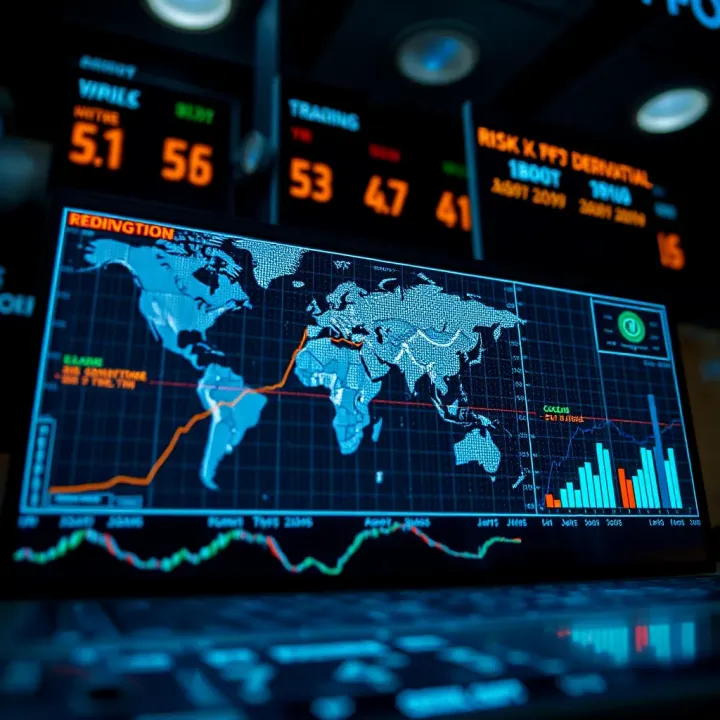
The most common types of derivatives include:
Futures: Standardised contracts traded on exchanges, obliging the parties to transact at a set price later.
Options: Contracts giving the buyer the right, but not the obligation, to buy or sell an asset within a timeframe.
Forwards: Similar to futures but privately negotiated and less regulated.
Swaps: Agreements to exchange cash flows, such as interest rate swaps where fixed and floating rates are swapped.
These instruments not only help in hedging risks but also support speculative activities and arbitrage opportunities, contributing to market liquidity and price discovery.
Derivatives can magnify gains but also losses, making them tools that require thorough understanding and disciplined usage.
In the Indian markets, derivative trading is regulated by the Securities and Exchange Board of India (SEBI) and primarily facilitated through exchanges like the National Stock Exchange (NSE) and Bombay Stock Exchange (BSE). Regulatory frameworks ensure transparency, limit excessive speculation, and protect investors.
Understanding derivatives equips traders, investors, and financial advisors to make informed decisions—whether it's about protecting investments, enhancing portfolio returns, or structuring complex trading strategies. As you explore this article, keep in mind how derivatives intertwine with everyday financial decisions and the broader economy.
Understanding derivatives is fundamental for anyone involved in trading, investment, or financial analysis. These financial instruments allow participants to manage risk or speculate on price movements without necessarily owning the underlying asset. For instance, a farmer in Punjab might use derivatives to lock prices for wheat harvest months ahead, protecting against unpredictable market changes.
A derivative is a contract whose value depends on an underlying asset’s price or performance. It does not have intrinsic value itself but reflects the price fluctuations of something else, like stocks, commodities, or currencies. In practical terms, this means you can gain or lose money based on the future movement of the asset's price, without owning it directly.
Derivatives allow businesses and investors to manage uncertainty. For example, an importer paying dollars might use currency derivatives to hedge against rupee-dollar exchange rate swings, avoiding unexpected costs.
The underlying asset is the foundation of any derivative contract. It can be anything from equities, bonds, commodities like gold or crude oil, interest rates, indices like the Nifty 50, or even weather conditions in some cases.
Take equity derivatives: here, the price movement of shares like Reliance Industries determines the derivative contract’s value. This linkage helps traders and investors express views on market direction or protect existing investments without transacting in the actual shares.
Derivatives have been around for centuries, tracing back to ancient civilizations where farmers and merchants needed to secure prices before harvest or delivery. The rice futures contracts in Japan's Dojima market in the early 18th century are among the earliest recorded examples.
These contracts provided a way to stabilise income and manage price risk, much like today. Over time, derivatives evolved into sophisticated financial instruments traded on organised exchanges globally.
India’s journey with derivatives began in the late 1990s, with the National Stock Exchange (NSE) launching index futures in 2000. Since then, equity, currency, and commodity derivatives have matured rapidly.
Today, NSE and BSE host liquid derivative markets catering to retail and institutional investors alike. For example, retail traders in Mumbai actively use options and futures on the Nifty 50 to hedge portfolios or speculate. The regulatory supervision by SEBI ensures transparency, making derivatives an accessible and reliable tool in India’s financial landscape.
Derivatives play an essential role in modern financial systems by offering tools to manage risks and seize opportunities without the friction of owning the underlying asset directly.
Understanding different types of derivatives helps traders and investors choose the right instrument based on their risk appetite, timeframe, and market outlook. Derivatives are mainly tools to transfer risk, speculate, or hedge positions by agreeing on prices or payouts related to underlying assets like stocks, currencies, or commodities. Each type—futures, options, swaps, and forwards—offers unique features and practical uses, often tailored to specific market needs.
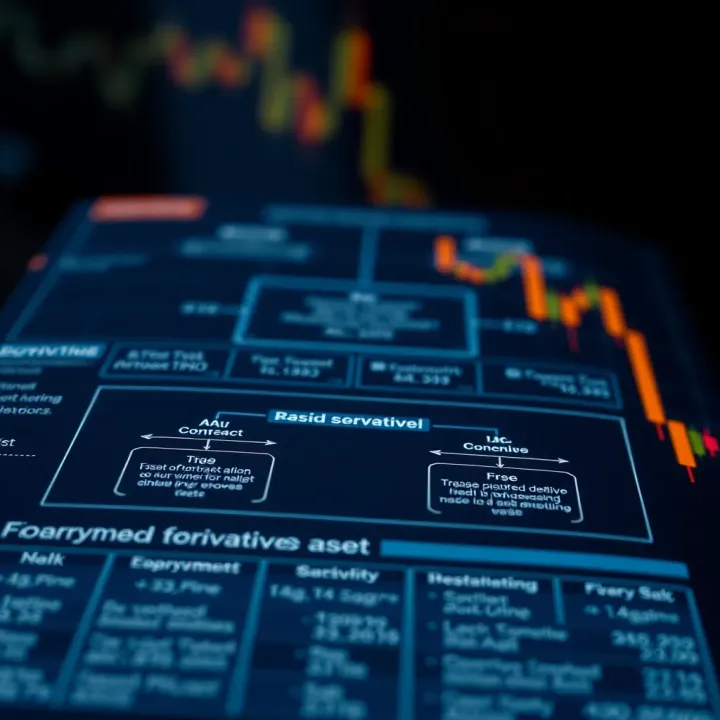
Futures contracts are standardised agreements traded on exchanges like the National Stock Exchange (NSE) to buy or sell an asset at a fixed price on a future date. They involve a clearinghouse that guarantees the transaction, reducing counterparty risk. Because of their standard terms—contract size, expiry date, underlying asset—they offer liquidity and price transparency.
Traders need to maintain a margin—initial and daily mark-to-market settlements—ensuring good faith and reducing defaults. For example, an investor might buy a futures contract on crude oil to lock today's price for delivery after one month, hoping to benefit if the price rises.
Futures primarily serve hedgers and speculators. Farmers in India use commodity futures to fix prices of their produce months ahead, protecting against price crashes during harvest. Similarly, exporters hedge currency risk by selling currency futures to lock exchange rates in advance.
Speculators seek to profit from price swings without owning the underlying asset. For instance, a trader might buy Nifty futures expecting a market rise. Futures provide efficient leverage, allowing exposure to large positions with relatively smaller capital.
Options give the buyer the right, but not the obligation, to buy (call) or sell (put) an asset at a predetermined strike price before or on expiry. Unlike futures, options provide asymmetric risk; buyers risk only the premium paid while sellers carry greater obligations.
Call options benefit investors expecting price rise; for example, buying a call on Reliance Industries shares allows participation in gains without full investment. Put options help hedge against price declines, useful for protecting holdings during market uncertainty.
Option prices depend on intrinsic value (difference between underlying price and strike) and time value (potential for profitable movement before expiry). Factors affecting pricing include volatility, time to expiry, interest rates, and dividends.
Models like Black-Scholes help estimate fair option prices, but traders also watch market implied volatility—often rising during uncertain times—as it pushes premiums up. Understanding pricing helps determine if options are overvalued or provide good hedging or speculative opportunities.
Swaps and forwards are over-the-counter (OTC) contracts, customised between parties without exchange standardisation. Forwards involve agreeing today to buy/sell an asset at a future date and price, but unlike futures, they lack daily settlement and demand counterparty trust.
Swaps typically exchange cash flows based on different financial indices or interest rates over time, making them complex compared to direct asset contracts like futures. Both instruments lack the liquidity and transparency of exchange-traded derivatives but allow tailored risk management.
Interest rate swaps help Indian corporates or banks manage debt costs by swapping fixed-interest payments for variable rates or vice versa, matching cash flows to liabilities. For example, a company with a floating rate loan may enter a swap to pay fixed rate, reducing uncertainty.
Currency forwards and swaps enable exporters and importers in India to hedge exchange rate exposure, locking rates or swapping currencies over multiple periods. Given India’s global trade growth, these instruments are crucial to manage volatility in INR rates against the USD, EUR, or other currencies.
Derivatives vary widely, but each type—futures, options, swaps, forwards—fills specific gaps in risk management and trading, making an understanding of their features vital for effective market participation.
Derivatives allow traders and investors to manage price risks effectively. They act as a shield against sudden market fluctuations that can erode profits or increase losses. By locking in prices or rates through derivatives like futures or options, businesses and investors can stabilise their financial plans and budgets.
Protecting against price fluctuations: Hedging with derivatives is like buying an insurance policy. For example, a farmer growing wheat can sell wheat futures to lock in a price before harvest. Even if wheat prices fall unexpectedly at the time of sale, the farmer’s income stays protected. Similarly, companies that rely on importing raw materials often hedge currency risk by entering into currency forwards. This stops them from suffering losses if the rupee weakens sharply.
Examples in commodity and currency markets: Commodity markets provide clear cases of hedging — like oil refineries locking prices in futures contracts to avoid paying more when global crude rates rise. Currency hedging also plays a crucial role in India’s import-export sector. Exporters use currency options to ensure they receive a minimum value in rupees against payments in dollars or euros. These real-world examples highlight how derivatives help maintain predictable cash flows in often volatile markets.
Speculative trading explained: Speculation involves betting on price movements to earn profits rather than managing existing risk. Traders buy derivatives like options or futures hoping prices will move favourably. While speculation adds liquidity and depth to markets, it is inherently risky because it depends on predicting how markets behave.
Potential for high rewards and high losses: Speculators can make large gains if their market call is right—say, correctly anticipating a rise in crude prices. However, wrong predictions can lead to steep losses. Unlike hedgers, speculators don’t own the underlying asset, so margin calls and volatility can wipe out their investments quickly. This risk-reward balance makes speculation attractive to some but dangerous without careful strategy and capital management.
Using derivatives strictly for hedging provides a way to control risk rather than amplify it, which is why many companies and investors rely on them for stabilising operations and finances.
In summary, derivatives help manage uncertainties by allowing users to lock in prices and rates or to take calculated risks for potential profit. Understanding when to hedge and when to speculate is key for anyone dealing with derivatives in Indian or global markets.
Derivatives play a significant role in India’s financial markets by allowing traders, investors, and businesses to manage risks and speculate efficiently. Over the past two decades, the Indian financial system has seen rapid growth in derivative trading, driven by advancements in technology and regulatory reforms. Derivatives help stabilise markets by enabling price discovery and risk transfer, especially in volatile sectors like commodities and currencies.
SEBI regulates the Indian derivatives market to ensure transparency, protect investor interests, and maintain market integrity. It sets norms for trading, reporting, and settlement processes, reducing the likelihood of manipulation or unfair practices. For example, SEBI mandates position limits to avoid excessive speculation and requires brokers to disclose client exposure regularly. This regulatory oversight makes derivative trading safer for individual investors and institutional participants alike.
The National Stock Exchange (NSE) and Bombay Stock Exchange (BSE) are the two major platforms where most derivative trading occurs in India. NSE is dominant in equity derivatives, offering futures and options on popular indices such as Nifty 50 and individual stocks. BSE also provides a range of derivative contracts, including index futures and options. These exchanges offer robust trading infrastructure with efficient order-matching systems and real-time price feeds, essential for managing fast-moving markets. Their clearinghouses guarantee contract settlements, minimising counterparty risk for traders.
Equity derivatives in India mainly include stock futures, stock options, index futures, and index options. For instance, a trader may buy Nifty index futures to hedge against a portfolio drop during uncertain market conditions. These instruments allow investors to take positions on individual stocks or indices without owning the underlying shares. Equity derivatives also provide liquidity and help discover fair pricing. Retail investors and institutional players alike use these tools to amplify returns or protect gains.
Currency derivatives like USD/INR futures and options let businesses and traders hedge currency risk arising from overseas transactions or investments. For example, exporters use these contracts to lock in exchange rates, protecting their rupee revenues from forex volatility. Commodity derivatives cover essential Indian products such as gold, crude oil, and agricultural goods like chana (chickpeas) and guar gum. Farmers, traders, and manufacturers use these contracts to fix prices ahead of harvest or production, reducing uncertainty and planning better.
The Indian derivatives market, backed by strong regulations and active exchanges, serves as a vital tool for managing risks and improving market efficiency.
By understanding these market mechanisms and instruments, traders and investors can make informed decisions that align with their risk appetite and financial goals.
Derivative trading offers many opportunities, but it comes with clear challenges that traders and investors must recognise. Understanding these challenges helps in making informed decisions and managing risks effectively. Market risks and volatility, as well as legal and ethical considerations, form the foundation of these challenges.
Managing price risk is one of the most significant concerns in derivative trading. Price risk occurs when the underlying asset's value swings unexpectedly, affecting the derivative's worth. For example, a farmer hedging corn prices with futures contracts might still face losses if sudden weather changes disrupt the market. Managing this risk often involves setting stop-loss orders or diversifying derivative positions to limit exposure.
However, derivatives themselves can amplify volatility because of leverage. A slight price movement in the underlying asset might cause large gains or losses in the derivative contract. This means traders need to constantly monitor market conditions and stay disciplined with their strategies. Failure to control price risk can wipe out margins quickly, especially in markets like commodities and currencies.
Liquidity and counterparty risks also impact derivative trading significantly. Liquidity risk means difficulty in buying or selling a derivative without affecting its price, especially in less popular or over-the-counter (OTC) derivatives. For instance, a trader holding a complex interest rate swap might find it hard to exit the position swiftly when market conditions turn unfavourable.
Counterparty risk arises when the other party in a contract fails to meet obligations. Even on regulated exchanges like NSE or BSE, where clearinghouses act as intermediaries reducing this risk, OTC derivatives depend heavily on the counterparty’s creditworthiness. Traders and institutions usually mitigate this risk by dealing with trusted parties and demanding collateral or margin calls.
Compliance requirements are essential to maintaining orderly and fair derivative markets. Regulatory bodies like SEBI in India enforce rules to ensure transparency, adequate disclosure, and investor protection. Traders must file correct reports, avoid insider trading, and adhere to margin requirements. Non-compliance can lead to penalties, loss of licence, or even criminal charges.
In practice, compliance involves understanding constantly updated regulations and adapting to new directives, such as those related to algorithmic trading or commodity derivatives. For example, sudden changes in position limits or margin norms announced by SEBI require immediate action from participants to avoid violations.
Avoiding market manipulation safeguards the market’s integrity. Manipulation includes practices like spoofing (placing fake orders to mislead others) or cornering the market by gaining excessive control over a commodity or asset. Such actions distort true price discovery and harm genuine traders.
Regulators keep a close watch on unusual trading patterns and can impose fines or bans on offenders. Market participants should adopt ethical trading practices, report suspicious activity, and avoid attempts to influence prices unfairly. Maintaining fair trading benefits everyone and sustains long-term market confidence.
Successful derivative trading relies not only on opportunities but also on understanding and managing risks and regulations effectively. Ignoring these challenges can lead to heavy financial and reputational losses.
Important risks: price fluctuation, liquidity problems, counterparty default
Legal rules by SEBI protect investors, ensure market transparency
Ethical trading stops manipulative behaviour
Traders and investors will benefit most by staying alert, informed, and disciplined while dealing with derivatives in India's dynamic financial markets.
Explore Qutex in detail: its definition, applications across industries, key advantages, challenges, and future outlook. Gain insights with clarity 📊🔍.
Explore Quptex: its features, uses, security, and user insights. Learn how this tech fits India's growing digital scene. 🔍💡🇮🇳

Explore DERV fuel use in India's industries 🚛, its chemical nature, pricing trends ₹, environmental impact, and the regulations shaping its future role in energy.

🇬🇧 Explore British citizenship by descent—who qualifies, the process, documents needed, and rights plus limitations within UK and abroad. Stay informed! 📜✈️
Based on 10 reviews