

Real Trading Platforms Explained: Features and Tips
Explore real trading platforms: features, benefits, security & tech tips. Make informed choices to succeed in India's trading market 📈💡🔒
Edited By
Sophia Mitchell
A demo trading platform gives you a chance to practice trading without risking real money. For Indian investors, this means you can explore markets like the NSE or BSE, try different trading strategies, and get familiar with order types before committing your hard-earned cash.
These platforms simulate real market conditions using virtual funds, so you experience price movements, order matching, and execution just like in live trading. Yet, there's no financial loss if a trade goes wrong.

Demo trading acts like a sandbox for investors to build confidence and understand market mechanics safely.
For example, you can test a momentum strategy on Nifty futures or practise buying and selling stocks during a volatile session without worrying about losing ₹50,000 or more. This trial-and-error helps you avoid costly mistakes later.
Indian platforms such as Zerodha's TradingView demo or Upstox’s virtual trading account offer these features free of cost. They include:
Real-time data updated continually
Tools like candlestick charts, technical indicators, and watchlists
Ability to place various order types (market, limit, stop-loss)
Using these features, you can become comfortable analysing trends and executing trades. However, remember demo trading lacks the emotional pressure of real losses, which influences decision-making.
Understanding these nuances is key before moving from demo to actual trading with money. This guide will walk you through how demo trading works, its benefits, and ways to make the most of it as an Indian investor.
The aim is to cut down learning curves and boost your chances of long-term success in the markets.
A demo trading platform is a tool that lets investors practise buying and selling stocks, commodities, or currencies using virtual money. This simulated environment provides a risk-free setup where traders can learn market mechanics, test strategies, or familiarise themselves with tools before dealing with real funds. Its relevance for Indian investors lies in the confidence and experience it builds, especially when navigating the volatile and often unpredictable markets like the NSE or BSE.
Demo platforms replicate real trading conditions with virtual funds rather than actual money. For example, you might get ₹5 lakh of virtual balance on Zerodha Kite’s demo mode, letting you execute orders just as you would with a live account. This hands-on experience helps new investors understand how the market operates day-to-day without risking their hard-earned savings.
It’s not just about placing orders; the platform shows how prices fluctuate, how volumes affect trades, and even how order execution works in real time. This simulation mirrors real scenarios but frees users from financial losses, making it ideal for beginners and those trying new strategies.
Demo trading is a classroom where mistakes don't cost money. It lets you see how opening price gaps, limit orders, stop-loss orders, and other market mechanics impact your portfolio. For instance, if you're trying to understand how the Sensex responds to quarterly results or RBI policy news, a demo platform shows real-time reactions without financial stress.
By practising here, Indian investors can grasp complex concepts like margin trading or derivative contracts safely. This practical learning prevents rash decisions when real money is involved.
These are the most common and focus on equity trading. Platforms like ICICI Direct or Angel Broking offer demo accounts where you trade Nifty 50 stocks or mid-cap companies virtually. It's useful if you aim to invest in Indian shares, as you get a feel for order types, watchlists, and market depth relevant to the local exchanges.
Such demos also help you explore analysis tools, like candlestick charts or volume overlays, which are vital for technical trading.
Forex and commodity markets attract many Indian traders, and demo platforms cater to these as well. For example, MetaTrader 4 offers virtual trading on currencies like USD/INR or commodities such as gold and crude oil.
These platforms allow users to practise managing leverage and fast-moving market conditions. Given the volatility in forex and commodities due to global events, practising here can sharpen response times and risk management.
With crypto gaining traction in India, demo platforms are emerging for this asset class. Exchanges like WazirX or Coinbase offer virtual trading environments where you can simulate buying Bitcoin, Ethereum, or other tokens without real investment.
Given the extreme price swings common in cryptocurrencies, a demo account helps users understand market behaviours and test automated trading bots without falling prey to emotional decisions.
A demo trading platform serves as the bridge between theory and practice, empowering Indian investors to enter the market with knowledge and poise, not guesswork or anxiety.
Demo trading platforms provide a simulated space where investors can practise trading without risking real money. To understand their workings, it's essential to look at how virtual funds are allocated and how the platform mimics real market behaviour.
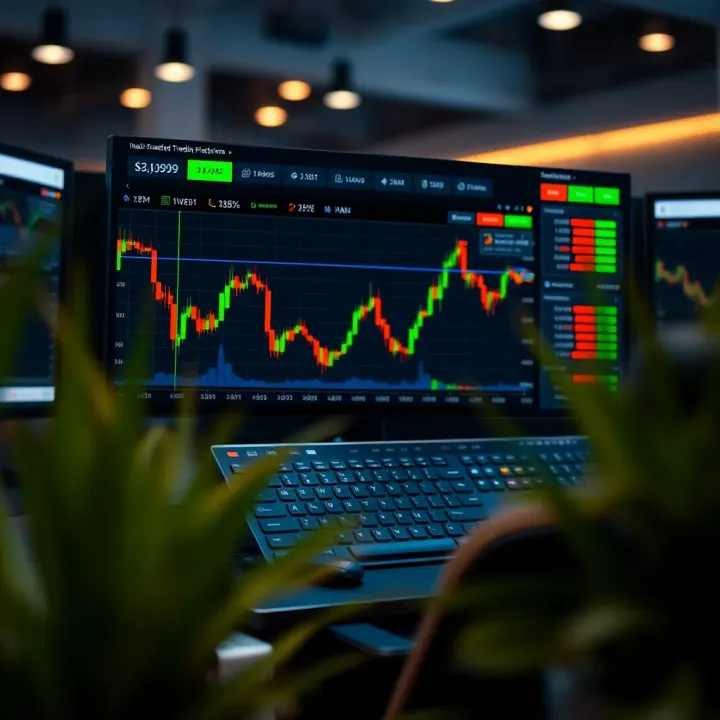
When you first register on a demo trading platform, you receive an initial virtual balance. This amount varies across platforms but usually ranges between ₹1 lakh and ₹10 lakh in virtual funds. This sum allows you to place trades and experiment with different investment strategies as if you were using actual money, without any financial loss. For instance, if you allocate ₹50,000 to buy shares of a company, the platform deducts it from your virtual balance, helping you track your hypothetical profits or losses.
Setting up an account on a demo platform is straightforward, often requiring basic details like name, email, and phone number. Unlike live trading accounts, demo accounts rarely need detailed KYC (Know Your Customer) verification. This makes the registration process quick, so you can immediately start practising. Brokers like Zerodha and Upstox offer both live and demo accounts, letting you switch to real trading when ready.
A key strength of good demo platforms lies in their use of live market data feeds. These platforms pull real-time information from exchanges such as NSE and BSE, ensuring stock prices and indices update just like in the actual market. This accuracy helps you test your trading skills against the market's actual behaviour, whether it’s the Sensex rising or a demand-supply shift in commodities like crude oil.
Order execution speed and price simulation are also crucial. Demo platforms aim to replicate the latency and slippage you would experience in live trading. For example, if you place a market order, the platform simulates the time taken for execution and any price changes in that interval. While perfect replication is tough, platforms strive to be close enough so you get a realistic sense of how your orders would perform in real markets. This is especially helpful for day traders who need to judge timings carefully.
Using virtual funds with real-time data and realistic order execution allows demo platforms to serve as effective practice grounds before stepping into live markets.
Understanding these mechanics helps Indian investors gain hands-on experience, making the shift to live trading smoother and more confident.
Demo trading platforms offer a hands-on chance to learn trading without risking real money. This is particularly useful for Indian investors new to the market who want to build skills and understand trading dynamics before stepping into live markets.
Building trading skills on a demo platform helps you get comfortable with the basics of trading. Instead of reading about buying and selling shares or commodities, you can actually practice placing orders, observing price movements, and managing a virtual portfolio. For example, if you trade on the NSE’s demo platform, you experience how Nifty 50 stocks fluctuate without risking even a rupee.
Testing strategies safely means you can try various trading approaches without financial pressure. Suppose you want to explore break-out trading for intraday stock picks or trend-following in forex pairs like USD/INR; demo platforms let you simulate these strategies and track their success or failure. This trial-and-error method sharpens your skills and helps fine-tune tactics before committing real funds.
Platform navigation is crucial for smooth trading, especially when you're dealing with short time frames or volatile markets. Demo platforms familiarise you with the menus, order placement buttons, and watchlists. For instance, using an app like Zerodha Kite’s demo version enables you to understand how to quickly locate stocks, place stop-loss orders, and switch between different market views.
Order types and chart analysis form the backbone of informed trading decisions. Demo accounts expose you to diverse order types such as market orders, limit orders, and stop-loss. Likewise, they let you experiment with charting tools to spot trends, support-resistance levels or candlestick patterns. For example, in a demo setting, you might discover that using a trailing stop-loss protects profits better during volatile swings in the Sensex.
Using demo platforms regularly instills confidence, an asset often underestimated by new traders. When you’ve faced simulated market ups and downs, you become less hesitant to take decisions in live trading. This psychological readiness can make a huge difference in managing losses calmly and sticking to your trading plan.
Getting familiar with trading mechanics and tools in a risk-free setting prepares you better for the challenges of real markets. It's like a pilot practising flight simulators before handling an actual plane.
In short, demo trading bridges the gap between theory and practice, reduces rookie mistakes, and empowers Indian investors to trade more thoughtfully and confidently when real money is at stake.
Demo trading platforms provide a safe zone for practising trading strategies, but they also come with inherent limits that investors should understand before relying on them completely. Recognising these limitations helps set realistic expectations and prepares you better for live market conditions.
One major difference between demo and live trading lies in the absence of genuine emotional stress. When you're trading with virtual funds, there’s no real loss or gain at stake. This often leads to more relaxed or even riskier decisions. For instance, an investor might repeatedly try aggressive trades on a demo platform simply because no actual money is involved.
In contrast, live trading with real money triggers emotions like fear, greed, and hesitation. These feelings impact decision-making and discipline in ways that demo platforms can’t replicate. Many traders find that while their demo strategies look promising, they struggle to stick to them when real capital and psychological stakes come into play. Understanding this gap helps you prepare mentally for the shift from demo to live trading.
Some demo platforms use delayed or slightly inaccurate market data, which affects how realistic the trading experience is. For example, if the price feeds lag even by a few seconds, order execution may not reflect current market prices. This can mislead traders testing scalping or other fast-paced strategies, giving them a false sense of profitability.
Besides data delays, platforms might not account for liquidity constraints or slippage in volatile markets. Such factors influence actual trading costs and success but are rarely simulated perfectly. Hence, while demo trading gives a decent overview, its limitations in market data accuracy mean your tested strategies need re-validation with small live trades before full deployment.
Many demo trading accounts come with time restrictions or limited features compared to live accounts. A platform might offer only 15 or 30 days of demo access or restrict usage to specific instruments and tools. For beginners wanting extensive practice or advanced technical analysis, these constraints can slow progress.
Additionally, some platforms disable essential functions like automated trading, leverage options, or real-time news updates in demo mode. This limits the scope of strategy testing relevant for markets like Forex or equities. Choosing demo platforms that offer comprehensive access for a reasonable period is crucial to gain meaningful experience before trading with real money.
While demo trading platforms are valuable learning tools, recognising their limitations — emotional disconnect, data accuracy issues, and access restrictions — ensures you make smarter, more prepared moves when stepping into live markets.
Choosing the right demo trading platform is essential if you want to practise effectively and build sound trading skills. The key features that a platform offers directly impact your learning experience, so it helps to focus on practical benefits rather than just flashy interfaces. Let’s break down the most important features you should look for.
A straightforward, easy-to-navigate interface matters a lot, especially if you’re new to trading or prefer using mobile devices. Platforms like Zerodha’s Kite or Upstox offer clean layouts that make browsing through market data, charts, and order types simple even on smartphones. In India, where many traders rely on mobile phones for access, seamless mobile compatibility is non-negotiable. Slow-loading pages or cluttered screens can disrupt your practice sessions and lead to frustration.
The demo platform should reflect live market conditions as closely as possible. Access to real-time data—including stock prices, currency pairs, and commodity rates—is crucial for testing strategies under realistic circumstances. For instance, NSE and BSE stocks with updated prices or MCX commodities give you a better feel of market movements. Some platforms delay data or use snapshots, which can mislead you while practising.
Also, ensure the platform covers the instruments you’re interested in—whether trading equities, Forex, commodities, or cryptocurrencies. Trying to learn commodity trading on a platform focused only on stocks will limit your experience.
A demo platform becomes even more useful if it offers educational content and user support. Tutorials, webinars, and articles help clarify complex concepts while guiding you through the platform’s tools. For example, platforms like Upstox and Angel Broking provide video guides and articles tailored for Indian investors.
Customer support is equally important. If you struggle with account setup or features, timely assistance via chat or phone can save you hours otherwise lost in confusion.
Testing different strategies is a big part of demo trading. Look for platforms that let you customise conditions like leverage, order types, and timeframes. This flexibility helps mimic various trading styles, from day trading to swing trading.
For example, if you want to try short-selling or options strategies, your demo platform should allow placing different order types like stop-loss or limit orders. Customisable chart indicators and alerts also enhance your ability to refine strategies.
Selecting a demo trading platform with these key features ensures you practise under near-real conditions, making the transition to live trading smoother and more confident.
By focusing on these practical features—friendly navigation, accurate real-time data, educational support, and strategy customisation—you set yourself up to gain genuine experience. This approach prevents wasted time and effort on platforms that do not mirror actual trading environments well enough for serious learning.
Setting realistic trading goals is the foundation for making the most of a demo trading platform. When you start with practical, achievable targets, it keeps your learning focused and grounded. For example, aim to improve your understanding of a few key indicators rather than trying to master everything at once. Setting smaller goals such as practising consistent entry and exit strategies over a week helps you measure progress clearly. This approach ensures that demo trading provides measurable skill-building rather than vague practice.
Keeping a trading journal is more than just noting your trades. It helps you develop discipline by making you accountable for every decision you make on the demo platform. Write down why you entered or exited a trade, the market conditions, and any emotions you felt. Over time, this record highlights recurring mistakes or biases, making it easier to improve. For instance, you might notice you get overconfident after a few wins or panic sell when prices dip slightly.
Reviewing wins and losses systematically aids in refining your strategy. Instead of focusing solely on the outcomes, try to understand the reasons behind each win or loss. For example, a loss might reveal a need to adjust stop-loss levels or reassess market entry timing. By reviewing your demo trading performance every week, you create a feedback loop that helps you make precise adjustments. This practice builds better trading habits and a clearer sense of risk management.
Recognising the shift in risk and emotions between demo and live trading is critical. Demo platforms use virtual money, so you don’t face the same psychological pressure as with real investments. When moving to live trading, emotions like fear and greed can cloud judgment. It's quite common to take undue risks or hesitate because the money is yours at stake. Being aware of this helps prepare mentally for the real environment—for example, practising mindfulness or controlled breathing before live sessions.
Starting with small capital is a smart way to bridge demo learning and actual trading. Deploying only a small portion of your investment corpus allows you to experience real market consequences without risking too much. For example, if you plan to invest ₹5 lakh in equities, beginning with ₹50,000 helps you test your strategy live, refine it, and build confidence gradually. This step also makes it easier to stick to your trading plan, as the financial pressure is manageable.
Consistency and thoughtful review are key to using demo trading platforms effectively. Set clear goals, track your trades meticulously, and ease into live trading with realistic expectations and small stakes. This is the best way to turn practice into profitable skill.
Indian investors often have specific queries when it comes to demo trading platforms. Addressing these questions helps clear common doubts and ensures better preparation before stepping into live markets. These queries focus on the nature of risk, the potential to earn real profits, and the ideal duration for practising using virtual funds. Understanding these points saves beginners from confusion and shapes realistic expectations.
Demo trading is risk-free in the sense that no real money is involved; all trades happen with virtual funds provided by the platform. This allows beginners to try strategies without worrying about losing capital. However, the experience differs from live trading since emotional responses—fear, greed, or hesitation—are absent. For example, a trader using ₹5 lakh worth of virtual funds on a demo platform won't lose actual money if prices move against them. Yet, the lack of real stakes means decision-making might not fully prepare an investor for real-world pressure.
Profits generated on demo platforms are entirely virtual and cannot be withdrawn. These platforms simulate trading results to help investors test strategies and understand markets—not to earn real returns. Consider this like a practice match in cricket where runs scored don’t count for official statistics. Indian investors should therefore avoid confusing demo profits with actual gains. Using profits from demo accounts for financial planning or withdrawals is not possible.
The ideal period for demo trading varies depending on individual comfort and skill level. Generally, spending at least a few weeks or months practising helps build confidence and understand market nuances. For instance, a new investor might use the demo platform daily for two to three months, tracking their trades through a journal to review mistakes and successes. This practice enables better discipline and readiness. However, over-reliance on demo trading can delay entering live markets where emotional and real financial challenges appear. Starting with small capital after sufficient practice bridges this gap effectively.
Using demo trading platforms wisely means setting clear goals, practising consistently, and recognising their limits in emotional experience and real profitability. This approach prepares you better for live investing in Indian markets.
Explore real trading platforms: features, benefits, security & tech tips. Make informed choices to succeed in India's trading market 📈💡🔒

Explore Qutex trading 📈 with this detailed guide—learn core concepts, setup, execution & risk management to trade smartly in India’s market 🇮🇳.
📱 Discover real trading apps: explore features, safety tips, benefits, challenges, and how to pick the best for smart, confident trading in India.
Dive into QX Trading 📈: Understand key strategies, risk management, tech tools, and the impact on Indian markets. Learn how it shapes modern trading today.
Based on 5 reviews