

Understanding Forex Accounts for Indian Traders
Understand how to open and manage a forex account in India 🇮🇳, know types, regulatory rules, fees, and tips for smarter, safer foreign exchange trading.
Edited By
Emily Carter
Forex trading sessions mark the active hours of currency trading across major financial centres worldwide. These sessions create distinct periods of market movement, liquidity, and volatility. For Indian traders, understanding these sessions is vital to time trades effectively, manage risks, and spot profitable opportunities.
The global forex market never truly sleeps, operating 24 hours on weekdays. However, trading activity fluctuates depending on which session is open. There are four primary forex sessions: Tokyo (Asian), London (European), New York (American), and Sydney (Pacific). Each corresponds to the business hours of major economic hubs.
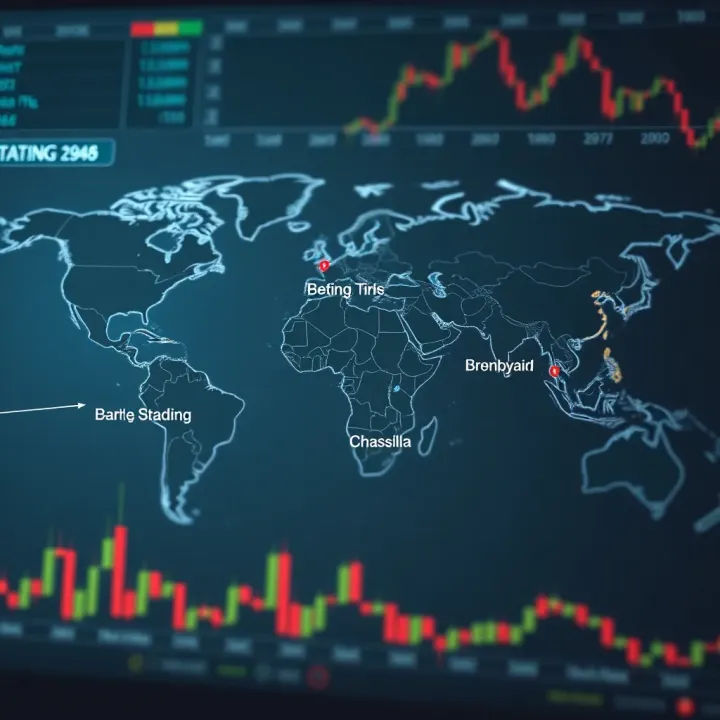
Indian Standard Time (IST) differs from these centres, so knowing session timings is crucial to find the sweet spots when volume and price movements are favourable. For instance, the London session begins around 12:30 pm IST and closes at 9 pm IST, bringing high liquidity to pairs involving GBP, EUR, and CHF.
Understanding when each session starts and ends helps traders capitalise on volatility spikes or avoid quiet phases with poor liquidity.
Tokyo (Asian) Session: 6 am to 3 pm IST
London (European) Session: 12:30 pm to 9 pm IST
New York (American) Session: 6:30 pm to 3:30 am IST
Sydney (Pacific) Session: 4:30 am to 1:30 pm IST
Notice the overlaps, especially between London and New York sessions (6:30 pm to 9 pm IST), where trading volumes soar. Such overlaps often bring sharp price swings, offering Indian traders profitable entry points if they time them right.
Monitor session overlaps for increased volatility.
Focus on currency pairs relevant to active sessions (e.g., EUR/USD during London-New York overlap).
Adjust trading schedules to align with high-liquidity hours to reduce slippage and improve order execution.
By syncing trading strategies with session timings, Indian traders can optimise their approach in the fast-moving forex market and make informed decisions that boost their success.
Understanding forex trading sessions helps you grasp when and where the world's currency markets are most active. These sessions mark periods when major financial hubs operate, influencing liquidity and price movement patterns. For Indian traders, knowing these sessions guides decisions about the best trading times, which pairs to focus on, and managing risks associated with market volatility.
Forex trading sessions refer to the segments of the day when specific regional markets around the globe are open for trading currencies. The primary sessions include the Asian (Tokyo), European (London), and American (New York) sessions. Each session has unique characteristics shaped by the financial centres driving activity during those hours. For example, during the Tokyo session, the Japanese yen sees heavy trading, while the London session has broad activity across euro, pound, and Swiss franc pairs.
These sessions matter because the forex market operates 24 hours but liquidity and volatility differ depending on the time and region. For instance, trading volume often spikes during overlaps of sessions, such as when both London and New York markets are open. For an Indian trader, understanding these periods is key to timing trades for better price execution and spotting potentially profitable moves.
The forex market’s continuous operation is due to its decentralised nature spanning multiple time zones. When one major market closes, another opens. This cycle keeps the flows of currency trading consistent worldwide. For example, the Tokyo session begins as the New York session ends, maintaining near non-stop activity.
Geopolitical events, economic releases, and central bank announcements in each market can sharply impact trading behavior. Suppose the Reserve Bank of India (RBI) announces a change in policy during the Asian session; you might notice volatility in rupee pairs right away. Similarly, US economic data released during the New York session can cause ripple effects across currencies.
Traders who align their strategies with these session timings often capture better price movements and avoid whipsaws caused by low liquidity periods.
Being aware of these global rhythms gives Indian traders a practical edge to plan trades around active hours, adjust risk exposure, and select currency pairs matching session activity. This insight forms the foundation for successful forex trading tailored to Indian Standard Time (IST) constraints and lifestyle needs.
Understanding the main forex trading sessions is essential for Indian traders aiming to maximise their market actions. Each session reflects the activity driven by major financial centres and offers distinct patterns of liquidity, volatility, and currency pair focus. Knowing these details helps traders choose when to enter or exit trades, manage risk better, and align strategies with market behaviour.
The Tokyo session marks the start of the trading day in Asian markets, often regarded as the Asian trading session. Currency pairs involving the Japanese yen (JPY) dominate here, such as USD/JPY and EUR/JPY. Additionally, pairs like AUD/USD and NZD/USD get attention due to the Australian and New Zealand markets operating closely. For Indian traders, monitoring yen-related pairs during this session is wise because the yen’s movements reflect Asia-Pacific economic conditions more strongly at this time.
Trading volume during the Tokyo session tends to be moderate compared to European and U.S. sessions. Volatility is generally lower, except when major economic data releases from Japan or China occur. This session suits traders preferring steady price action and less erratic movements, allowing for gradual positions in yen or commodity-linked currencies like AUD, which often shows steadier trends morning onwards.
The London session opens a few hours after Tokyo and represents the European trading day kickoff. This session witnesses heightened activity, especially in GBP, EUR, and CHF pairs such as GBP/USD and EUR/GBP. London’s role as a global financial hub means it overlaps with the tail end of the Asian session and the start of New York’s, producing peak liquidity. For Indian traders, this period often offers sharper price movements and improved chances for quick trades.
Price action during the London session frequently exhibits strong trends and breakouts because of large institutional participation. Trends established here often last into the New York session. Observing European macroeconomic updates helps traders anticipate moves; for instance, UK inflation data release can create sudden spikes in GBP pairs.
The U.S. market’s opening triggers the New York session, coinciding with peak liquidity due to overlaps with the London market. USD pairs like EUR/USD, GBP/USD, and USD/CAD become highly active. For Indian traders, the New York session offers opportunities to capitalise on the volatility and volume driven by Wall Street and American financial institutions.
Economic indicators from the U.S., such as Non-Farm Payrolls, unemployment rate, or Federal Reserve announcements, frequently cause significant market swings during this session. Capitalising on these events requires a keen eye on economic calendars and readiness for sudden price shifts. Indian traders who track these data releases can position themselves better for potential gains or risk reduction during the session.
Understanding these trading sessions and their features equips Indian traders to time their trades effectively, pick suitable currency pairs for each session, and manage risks aligned with session volatility and liquidity patterns.
Forex trading session overlaps refer to periods when two trading sessions are active simultaneously, leading to an increase in trading volume and volatility. These overlaps provide Indian traders with heightened opportunities due to the convergence of market activity, greater liquidity, and faster price movements. Understanding these overlaps helps traders time their strategies effectively and manage risks better.
For instance, the London-New York overlap stands out as the busiest trading window where traders can capitalize on heightened price swings. Meanwhile, the Tokyo-London overlap, though less intense, still offers notable activity especially for Asian-European currency pairs. Recognising these overlaps allows Indian traders to pick suitable trading hours that match their risk appetite and daily schedules.
This overlap typically occurs between 7:30 pm to 12:30 am IST, aligning with the end of the London session and the start of the New York session. This period records the highest liquidity and volatility, offering Indian traders a chance to enter or exit positions swiftly. Currency pairs like EUR/USD, GBP/USD, and USD/JPY experience increased fluctuations, which means higher profit potential but also greater risk.
Since many global traders and institutions are active during this overlap, Indian traders benefit from tighter spreads and more reliable price actions. For example, an Indian trader using technical analysis might spot a breakout in the EUR/USD pair during this time and execute quick trades benefiting from the rapid price movement.
Scalping and breakout strategies often work well during the London-New York overlap. Scalpers take advantage of quick price changes to make small profits repeatedly, which suits the fast-paced nature of this overlap. Breakout traders look for levels where the price breaks established support or resistance, riding the momentum created by increased market participation.
Traders focusing on news releases schedule their trades during this overlap as many key US economic reports like Non-Farm Payrolls and CPI data drop then. Such data often cause sharp market moves, so combining fundamental news with technical setups can improve trading outcomes.
This overlap happens roughly between 2:30 pm and 4:30 pm IST, when the Tokyo session is winding down and the London session is beginning. Although less volatile than the London-New York overlap, this window offers steady trading volumes, especially for pairs involving the Japanese yen and European currencies, such as USD/JPY and EUR/JPY.
The market here tends to be more range-bound, with price movements less dramatic but more predictable. This steadier activity suits traders who prefer lower risk and gradual trends.
Swing trading and range trading strategies fit well during the Tokyo-London overlap. Swing traders hold positions for several hours or days, capitalising on moderate price moves within this relatively calm window. Meanwhile, range traders benefit from identifying support and resistance levels, trading the predictable oscillations.
For Indian traders balancing daily commitments, this period offers a quieter trading environment where trades can be planned with lower stress. For example, a trader might watch the USD/JPY range during this time to plan entry and exit points with tight stop-loss settings.
Understanding session overlaps can greatly aid Indian traders in choosing the right timeframes and adapting strategies accordingly, balancing profit and risk across different market hours.
Forex trading sessions offer distinct market behaviours, volatility levels, and liquidity, which Indian traders can use to their advantage. Understanding session timings in Indian Standard Time (IST), selecting currency pairs wisely, and managing risks tied to volatility helps traders optimise their strategies and improve potential returns.
Each forex trading session corresponds to specific hours that, when converted to IST, help Indian traders plan their activity efficiently. The Tokyo session, for example, runs roughly from 6:30 am to 3:00 pm IST, offering chances to trade Asian currencies like the Japanese yen and the Australian dollar. The London session follows from 12:30 pm to 9:00 pm IST, with greater volatility in European currencies such as the euro and the British pound. Finally, the New York session spans 5:00 pm to 2:30 am IST, influencing the US dollar and related pairs.
Knowing these timings simplifies trading decisions for those balancing work or other commitments alongside trading. If a trader works a 9-5 job, the New York session may be less practical, while the Tokyo or London sessions can fit well with their schedule.
Indian traders often prefer sessions that suit their daily routines without causing undue stress or loss of focus. For instance, a professional might choose to monitor the London session during late afternoon and early evening hours, when market activity peaks. Freelancers or full-time traders could switch across sessions to capture the higher liquidity in overlaps, particularly the London-New York period, which occurs around 5:30 pm to 9:00 pm IST.
Balancing sleep and alertness is key. An intraday trader might avoid the Tokyo session due to early timings despite its potential, whereas a swing trader could focus on longer trends in the New York session. Choosing sessions based on personal capacity reduces fatigue and supports better decision-making.
During the Asian trading hours, currency pairs involving the Japanese yen (JPY), Australian dollar (AUD), and New Zealand dollar (NZD) typically show higher activity. For example, AUD/JPY and NZD/JPY often experience tighter spreads and steady trends. These pairs suit traders looking for moderate volatility without the wild swings common in other sessions.
The presence of major Asian economic centres like Tokyo and Sydney means news releases from these regions can trigger sharp movements in these pairs. Hence, monitoring economic calendars focussed on Asian markets becomes useful.
European hours see heightened action in pairs involving the euro (EUR), British pound (GBP), and Swiss franc (CHF). EUR/USD and GBP/USD are among the most traded and liquid pairs during this time. Traders benefit from the large volume and tighter spreads, making these pairs suitable for intraday and scalping strategies.
The American session adds the US dollar (USD) influence prominently, making USD-related pairs like USD/JPY and USD/CAD active. Important US economic data releases during this time often cause volatility spikes, creating both risks and opportunities. Indian traders should be ready with stop-loss orders and position sizing adapted to potential price jumps.
Volatility fluctuates across sessions and overlaps, so managing risk effectively is a must. The London-New York overlap typically shows the highest volatility; while this means bigger profit possibilities, it also entails rapid price movements that can wipe out unprotected trades. Setting stop losses and adhering to strict risk-reward ratios protects traders from unwanted surprises.
On the other hand, lower volatility in the Tokyo session demands patience but can benefit traders using range-bound strategies. Indian traders must assess their risk appetite and avoid overleveraging, especially during high-volatility periods, to safeguard capital.
Aligning your trading approach with session-specific characteristics and your own schedule can greatly increase the chances of consistent success in forex trading.
Tracking forex trading sessions accurately is vital for Indian traders aiming to make the most of market opportunities. Markets run 24/5, but volatility and liquidity vary widely across sessions. The right tools help you identify peak trading times, reduce risks, and stay ahead with timely decisions.
Forex session timers display current active trading hours for major forex centres like Tokyo, London, and New York, usually converted to Indian Standard Time (IST). These timers save you from constantly calculating session openings and closings, especially when sessions overlap and volatility tends to spike. For example, using a session timer, you would easily spot that the London-New York overlap happens from 7:30 pm to 12:30 am IST, a hot window for trading INR/USD or GBP/USD pairs.
Forex calendars list open and close times of these sessions daily. You can set alarms around these times or plan trades accordingly. Tools such as MetaTrader indicators or dedicated websites provide these timers and calendars without charge.
Economic data releases from countries like the US, UK, Japan, or Eurozone can swing forex markets within seconds. Indian traders should follow an economic calendar that highlights upcoming reports, such as Non-Farm Payrolls or RBI policy announcements. Alerts about these events allow you to avoid surprise volatility or capitalise on expected moves.
Moreover, knowing the timing of such news in IST terms helps you prepare. For instance, the US Federal Reserve interest rate announcement usually comes out at 11:30 pm IST, a key moment impacting the dollar pairs. Keeping an eye on business news portals like Bloomberg Quint or Reuters India aids to track real-time updates, while Telegram channels or WhatsApp groups focused on Forex alert trustworthy summaries.
Several trading platforms integrate session tracking and news alerts, creating a one-stop solution. Popular choices among Indian traders include MetaTrader 4/5, Zerodha’s Kite, and Upstox Pro. These platforms offer customizable watchlists, live charts, session timers, and economic calendars within the interface. For instance, Zerodha Kite provides live price feeds and economic event notifications, helpful in fast-moving markets.
Mobile apps like Investing.com and Forex Factory are handy for quick check-ins on sessions and global economic events while travelling or away from desktop setups. They also let you customise notifications by currency pairs or event types.
Effective use of timers, economic calendars, and reliable platforms not only keeps you updated but sharpen your timing to optimise trade entries and exits aligned with forex session dynamics.
By combining these practical tips and tools, Indian traders can enhance their strategy, avoid common pitfalls, and harness the distinct characteristics of each trading session better.
Understand how to open and manage a forex account in India 🇮🇳, know types, regulatory rules, fees, and tips for smarter, safer foreign exchange trading.
Join forex trading contests to sharpen skills, earn prizes ₹₹₹, & gain practical experience. Learn contest types, top Indian platforms, & winning strategies 📈💰

Explore the lives and strategies of the richest forex traders 🌍💰, learn key success factors, risks, and tips to build and sustain forex wealth 📈📊.

💹 Discover the richest forex traders: their strategies, success secrets, and impact on markets. Learn key insights to boost your trading journey today!
Based on 10 reviews