

QXBroker.com Review for Indian Traders
Explore QXBroker.com for Indian traders 🇮🇳! Get insights on accounts, instruments, regulations, payments, platforms & customer support 📊💹💰
Edited By
Isabella Morgan
The role of the Tehsildar forms a vital link within India’s administrative and revenue structure, especially at the sub-district or tehsil level. As a government officer responsible for revenue collection, land administration, and local law enforcement, the Tehsildar holds a position that directly impacts citizens and businesses alike.
Historically, the Tehsildar’s origin dates back to Mughal administration, where the officer managed taxation and maintained law and order in a designated territory. Today, the role continues to adapt, reflecting changes in governance and technology but retaining its core responsibilities.
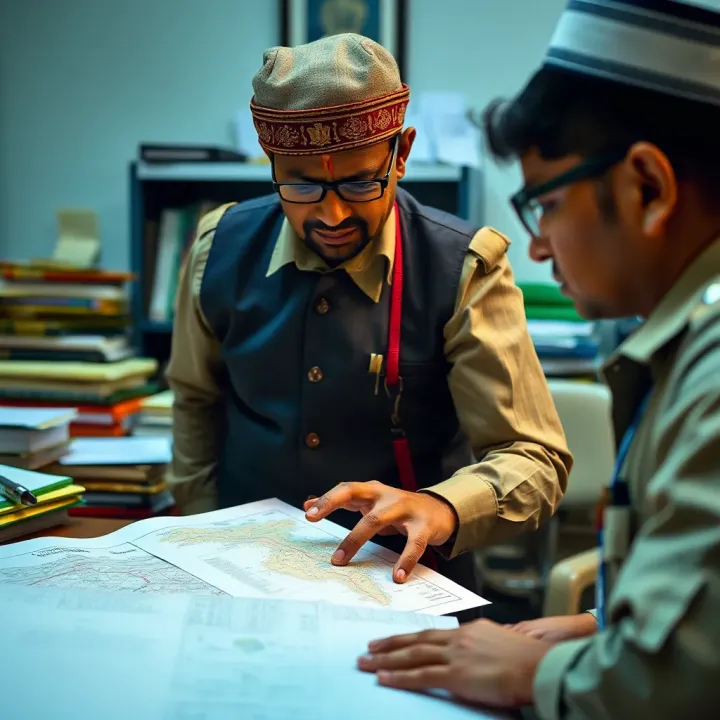
A Tehsildar oversees the assessment and collection of land revenue, ensuring compliance with revenue laws set by state governments. This includes preparing detailed land records, managing property transfers, and resolving disputes related to land ownership. For traders and entrepreneurs, timely and accurate land registration facilitates smoother business operations and access to credit.
Beyond revenue duties, the Tehsildar plays a part in maintaining local law and order, acting as an executive magistrate in many states. They issue various certificates such as caste, domicile, and income certificates, essential for availing government schemes or financial assistance. The office is therefore a crucial interface between citizens and the government machinery.
In areas prone to land disputes or where informal settlements exist, the Tehsildar’s role in adjudication and record-keeping is especially significant for safeguarding property rights and promoting ease of doing business.
The appointment process for a Tehsildar generally involves selection through state public service commissions or promotion from lower ranks of revenue officials. Their jurisdiction covers revenue villages, towns, and a group of villages within a tehsil, making them key figures in the administrative hierarchy.
Understanding the broad spectrum of functions performed by a Tehsildar helps investors and businesses navigate regulatory compliances connected to property and local administration. With ongoing reforms simplifying land records and integrating digital technologies, the Tehsildar’s office is evolving to enhance transparency and efficiency.
In the coming sections, we will explore the Tehsildar’s detailed responsibilities, challenges faced, and recent reforms that shape this significant office in India's administrative framework.
The Tehsildar serves as a key figure in India's administrative framework, operating primarily at the sub-district or tehsil level. This role is crucial for maintaining effective local governance, especially concerning revenue collection, law enforcement, and public administration. Understanding the position helps traders, investors, analysts, and entrepreneurs appreciate how ground-level governance influences property transactions, land use, and dispute resolution.
For example, whenever a land deal occurs or a government scheme is implemented locally, the Tehsildar's office plays an important role. Their responsibility ensures that records are updated correctly and local policies are followed, which directly impacts business and personal investments tied to land and property.
The Tehsildar post dates back to the Mughal period, where it initially served as a revenue collection officer overseeing a 'tehsil' — an administrative division. The term itself comes from Persian roots, relating to 'tax collector.' Over time, this position evolved under British colonial rule, expanding its administrative and judicial functions. The British solidified the role to ensure effective revenue collection and local order, a system that India continued after independence.
Today, the Tehsildar combines traditional duties with modern administrative tasks like digital record-keeping and public grievance handling. This blend ensures that the role remains relevant despite the changing administrative landscape.
A Tehsildar is positioned just below the District Magistrate (DM), acting as the primary revenue officer for the tehsil. They supervise subordinate staff like Naib Tehsildars and revenue inspectors, responsible for revenue, land records, and law enforcement at the sub-district level.
Their role bridges the district authorities and village-level administration. They ensure that government schemes reach rural and semi-urban populations effectively and handle cases related to land disputes and encroachments. For instance, if a new industrial park is planned, the Tehsildar's verification of land ownership and clearances plays a vital part.
The efficiency of a Tehsildar often influences how smooth local land transactions and administrative processes are, impacting investment confidence and governance quality.
The Tehsildar's position is therefore indispensable, especially for professionals dealing with land or regional administrative matters in India.
The role of a Tehsildar carries significant responsibility in local administration, making the appointment and qualifications critical to ensuring effective governance. The process ensures that only competent, well-trained individuals manage revenue collection, enforce laws, and coordinate government schemes within their tehsil. These qualities contribute not only to administrative efficiency but also build public trust.

Becoming a Tehsildar generally involves a competitive and rigorous selection process. Most states conduct a direct recruitment exam through their respective Public Service Commissions or Revenue Services. Candidates typically must hold at least a bachelor's degree in any discipline from a recognised university. Age limits usually range from 21 to 35 years, with some relaxations for reserved categories.
The written examination covers subjects like Indian polity, economics, history, and general studies relevant to the administrative duties of a Tehsildar. Following this, candidates may face an interview or personality test to assess decision-making abilities and communication skills. For instance, the Maharashtra Public Service Commission (MPSC) streamlines candidates through this multi-stage selection keen on finding those capable of local-level governance.
Physical fitness or basic medical standards can be part of the eligibility criteria, considering the demanding field visits and law enforcement duties the Tehsildar might undertake.
Once appointed, a new Tehsildar undergoes focused training designed to prepare them for revenue administration, legal procedures, and public interaction. Training often takes place at state administrative academies like the Lal Bahadur Shastri National Academy of Administration (LBSNAA) or similar regional institutes, depending on the state.
The curriculum includes land revenue laws, settlement processes, revenue records management, property dispute resolution, and use of digital tools like Bhoomi and DILRMP (Digital India Land Records Modernisation Programme). Practical field training under experienced officers familiarises them with ground realities.
Career progression for a Tehsildar offers upward mobility to positions like Additional District Magistrate or Deputy Collector. Promotion depends on experience, performance, and sometimes clearing departmental exams. For example, a Tehsildar in Karnataka can eventually become a Sub-Divisional Magistrate, involving broader administrative powers.
The recruitment and training pipeline ensures that a Tehsildar is well prepared to balance revenue duties with law enforcement and public service, which is essential for smooth tehsil-level governance.
This structured approach to appointment and qualifications builds a cadre of officers able to respond effectively to the challenges faced in diverse Indian tehsils, benefitting the community and the state administration alike.
At the heart of a Tehsildar’s duties lie core revenue and administrative functions. These responsibilities are critical because they ensure the smooth functioning of local governance and provide a direct link between government policies and grassroots realities. The Tehsildar's role here is hands-on, managing essential records, collecting revenue, and overseeing law and order. These functions impact daily life for traders, investors, and entrepreneurs who depend on clear land titles and stable local administration.
One of the primary tasks of a Tehsildar is to collect land revenue and maintain accurate land records. Land is a key asset for many businesses and individuals, so maintaining clarity on ownership helps prevent disputes and supports smooth transactions. The Tehsildar supervises the preparation and updation of land records, including ownership (patta), tenancy, and land use data. For example, in rural India, these records assist farmers in securing crop loans or government subsidies by verifying land ownership.
Efficient revenue collection by the Tehsildar also ensures timely government funds at the tehsil level, which are then used for local development projects. In some cases, delays or errors in records can stall property sales or construction activities, impacting entrepreneurial plans directly.
While the police deal with criminal law, the Tehsildar plays a significant role in maintaining law and order within the tehsil, especially concerning revenue-related disputes, illegal encroachments, and land issues. For instance, if there is a dispute over land boundaries affecting a trader’s property, the Tehsildar acts as the first point of contact to mediate and carry out preliminary enquiries.
This administrative control often involves collaboration with police or judicial officers but keeps the administrative processes local, efficient, and responsive. A well-maintained law and order environment encourages investors by providing a predictable business climate.
The Tehsildar also executes various government schemes at the tehsil level, ensuring benefits reach the intended recipients. These include schemes related to agriculture, housing, and social welfare. For example, schemes like the Pradhan Mantri Awas Yojana (PMAY) or subsidies for micro, small and medium enterprises (MSMEs) require the Tehsildar’s verification and certification.
By handling beneficiary identification, record verification, and on-ground monitoring, the Tehsildar bridges the gap between policy design and execution. This function provides practical value to entrepreneurs and investors who seek government support to scale operations or secure subsidies.
The Tehsildar’s core revenue and administrative functions are not just bureaucratic formalities but vital services that underpin local governance, economic activity, and social welfare at the tehsil level.
Revenue collection ensures government projects receive funding.
Record management guarantees legal clarity for land-related transactions.
Law enforcement supports a peaceful environment for business.
Scheme implementation connects government initiatives directly to citizens and traders.
Together, these roles make the Tehsildar a key figure for anyone engaged in commerce, property dealings, or local enterprises within India's administrative framework.
The Tehsildar holds a key position in addressing public grievances and resolving disputes, especially those related to land and property, at the tehsil level. This role ensures timely and efficient handling of issues affecting local communities, thereby preventing escalation and contributing to smoother governance. By acting as the first point of contact for many citizens, the Tehsildar helps maintain trust in administrative processes and reduces the burden on higher courts.
Land and property disputes form a significant part of the cases brought before Tehsildars. These could range from boundary disagreements, ownership claims, to inheritance conflicts. The Tehsildar is empowered to conduct initial inquiries, verify land records, and mediate between parties to find practical solutions. For example, if two farmers claim ownership over the same tract, the Tehsildar examines records like the land revenue register and may call for site visits before proposing a resolution. This avoids long-drawn legal battles and offers swift relief.
Moreover, the Tehsildar's involvement often includes facilitating mutation or transfer of land titles after dispute settlement. This function is crucial, considering that accurate land records impact loans, government benefits, and development projects. It is common for residents in rural tehsils to approach the Tehsildar for these services, making their role indispensable in property governance.
Beyond dispute resolution, the Tehsildar regularly interacts with diverse stakeholders — from village panchayats, local elected representatives, NGOs, to government departments implementing welfare schemes. These engagements help the Tehsildar stay informed about grassroots issues and emerging conflicts.
Such direct communication aids in early identification of grievances before they escalate. For instance, concerns over irrigation water distribution or delays in subsidy payments can be flagged up by community members. The Tehsildar's ability to listen, register complaints, and initiate prompt action reinforces administrative accessibility.
The Tehsildar acts as a bridge between the government and citizens, fostering dialogue, transparency, and resolution at the tehsil level.
The practical benefits for traders, investors, and entrepreneurs lie in the stability and clarity this role brings to land administration and local governance. Predictable processes around land disputes and grievance handling enhance confidence in investment and operational decisions within the tehsil jurisdiction.
Overall, the Tehsildar’s public grievance and dispute functions are a vital, often underrated pillar supporting India's local administrative ecosystem.
Tehsildars play a key role in local administration, but the office faces several challenges that affect efficiency and public trust. Addressing these issues is vital to ensure smooth governance, proper land revenue collection, and timely dispute resolution. Recent reforms also aim to modernise workflows and bring transparency, which benefits entrepreneurs, investors, and officials relying on accurate land records for decision-making.
One of the main challenges is the heavy workload related to land revenue collection and management of extensive land records. In many tehsils, outdated record-keeping practices and manual registers delay processes and increase errors, causing friction with landowners and businesses dependent on clear titles. For example, a farmer applying for a loan may face delays if land mutation is pending.
Another issue is the pressure from conflicting interests during land disputes or encroachments. Tehsildars often encounter political interference or local power dynamics that make impartial decision-making difficult. As a result, timely grievance redressal suffers, which might impact investor confidence in the area.
Infrastructure gaps also pose hurdles. Many tehsil offices lack adequate digital tools or trained personnel, affecting services like certificate issuance or welfare scheme implementation. This creates bottlenecks, especially in rural and tier-2 townships where access to government help is already limited.
Recognising these challenges, state governments and the central administration have introduced reforms focusing on digitisation and process simplification. The integration of land records into digital platforms, like the Digital India Land Records Modernisation Programme (DILRMP), helps provide updated ownership details online, reducing manual errors and speeding up transactions.
Mobile apps and web portals now allow citizens to apply for various certificates, track applications, and receive updates directly, easing visits to tehsil offices. This shift not only saves time but also cuts down corruption opportunities, fostering transparency.
Besides technology, training programmes are enhancing the capacity of Tehsildars in administrative ethics, dispute management, and IT skills. States such as Maharashtra and Karnataka have piloted workshops that improved office efficiency and citizen satisfaction.
The move towards e-governance in tehsil administration is reshaping public interaction, making processes more accessible and reliable, which is essential for the vibrant economic activity in India’s semi-urban and rural regions.
These reforms impact investors and entrepreneurs indirectly by ensuring accurate land titles and timely clearances, which are critical for property deals and project approvals. While challenges remain, ongoing digital initiatives and capacity building promise a more effective Tehsildar office suited to modern administrative demands.
Explore QXBroker.com for Indian traders 🇮🇳! Get insights on accounts, instruments, regulations, payments, platforms & customer support 📊💹💰

📈 Understand Quotex trading hours in India! Learn market timings, timezone tips, and maximize your trading strategy with detailed insights tailored for Indian traders.

Learn how to withdraw funds from Quotex with ease! 🤑 This guide covers eligibility, methods, common issues & tips tailored for Indian users 🇮🇳.

Explore Quotex in detail📈: its features, account types, regulatory info, pros & cons, and tips to trade smart in India's growing financial market💡.
Based on 13 reviews