

Future Outlook of Reliance Industries' Share Price
📈 Explore how Reliance Industries' share price might move over the next decade with insights on business trends, growth factors, and market shifts for investors.
Edited By
Isabella Wright
Cardano (ADA) has emerged as one of the leading cryptocurrencies, attracting significant interest from traders, investors, and analysts across India and beyond. Unlike many digital assets, Cardano positions itself as a blockchain platform designed for scalability, security, and sustainability through its unique proof-of-stake consensus mechanism.
In recent months, ADA’s price has demonstrated considerable volatility, reflecting a mix of broader crypto market trends and specific developments within Cardano’s ecosystem. Understanding these patterns is crucial for anyone considering ADA as part of their investment portfolio or trading strategy.
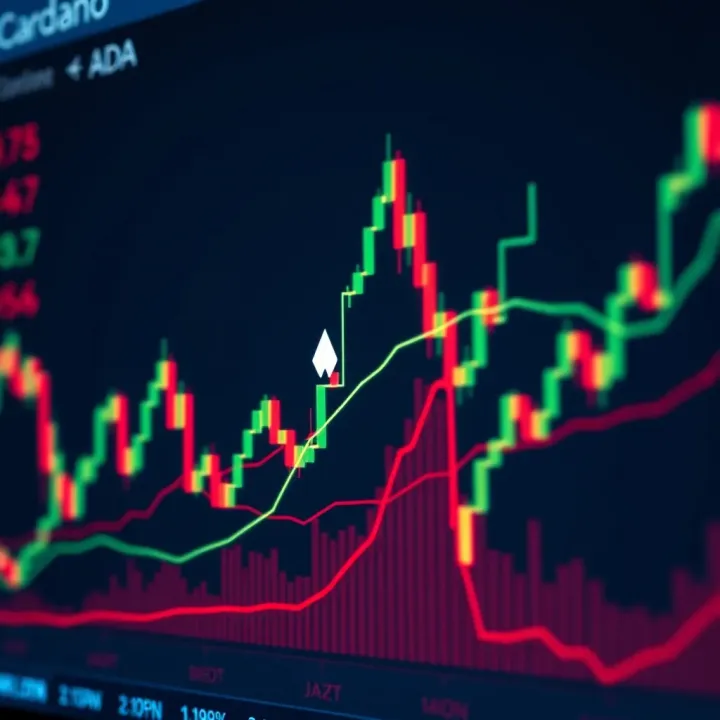
Several factors impact Cardano’s price trajectory, including:
Technological upgrades such as the Alonzo hard fork, which introduced smart contract capabilities
Regulatory attitudes in key markets like India, the United States, and the European Union
Market sentiment shaped by global macroeconomic conditions, interest rate changes, and crypto adoption trends
Partnerships and projects built on the Cardano blockchain
Investors should also watch key technical indicators such as moving averages, relative strength index (RSI), and trading volumes to gauge short-term price movements.
Looking ahead, potential risks like regulatory uncertainties and sector-wide downturns exist alongside opportunities from network upgrades and expanding use cases. This section sets the stage to analyse Cardano’s price forecasting backed by expert views and technical analysis, helping you navigate ADA’s future prospects with clarity.
Understanding Cardano and its native token ADA is key to grasping the factors that drive its price and influence investment decisions. Cardano offers more than just a digital currency; it aims to build a secure, scalable blockchain platform with a strong research foundation. This overview lays the groundwork for analysing ADA’s market trends and gives investors insights into its potential.
Cardano emerged in 2017, spearheaded by Charles Hoskinson, one of Ethereum's co-founders. It distinguishes itself by following a peer-reviewed, scientific approach to blockchain development. This methodical framework involves academic research, formal methods, and cryptographic proofs to build a robust platform. For example, the proof-of-stake consensus mechanism, Ouroboros, was carefully scrutinised and tested before deployment, aiming to improve energy efficiency compared to Bitcoin’s proof-of-work.
This rigorous development process itself adds credibility and confidence among users and investors. It reflects Cardano’s ambition to become a more sustainable and secure alternative to earlier blockchains. For traders, this background implies that ADA’s price movements might respond differently around network upgrades or academic milestones.
What sets ADA apart lies in its layered architecture separating the settlement layer (handling transactions) from the computation layer (smart contracts and decentralised applications). This modular structure allows updates without disrupting the entire system. Moreover, Cardano emphasises interoperability and regulatory compliance, making it attractive for real-world applications such as supply chain tracking and identity verification.
Practically speaking, ADA’s use cases extend beyond mere value transfer. Its smart contract platform supports decentralised finance (DeFi) and non-fungible tokens (NFTs) but with enhanced security measures. Investors looking at ADA consider not only market demand but also the technology’s adaptability to emerging blockchain trends.
ADA consistently ranks among the top 10 cryptocurrencies by market capitalization, often measuring around ₹4,00,000 crore to ₹5,00,000 crore, highlighting strong liquidity and investor interest. Daily trading volumes on major exchanges like WazirX and Binance India usually cross ₹500 crore, indicating active participation from both retail and institutional players.
These metrics suggest good market depth, which can reduce price manipulation risk and provide smoother entry and exit points for investors. Higher trading volumes also reflect market confidence and can signal upcoming price volatility, relevant for short-term traders.
Compared to giants like Bitcoin (BTC) and Ethereum (ETH), ADA stands out for its methodical development and lower energy consumption. While BTC is often seen as digital gold and ETH as the leading smart contract platform, Cardano aims to combine security, scalability, and sustainability.
Although ADA's market cap is still below BTC and ETH, it competes with other emerging platforms like Solana and Polkadot. Investors often compare these to assess growth potential and resilience. For instance, ADA’s slower but steady progress contrasts with Solana’s rapid rise and intermittent network issues, influencing how investors weigh risk and expected returns.
ADA’s unique blend of scientific rigor, sustainable design, and growing adoption sets it apart in the crypto space, making its overview a crucial starting point for price analysis and forecasting.
Understanding the factors that influence Cardano's (ADA) price is essential for traders, investors, and analysts aiming to navigate its volatility effectively. ADA's price movement reflects a combination of technological progress, investor sentiment, and regulatory changes, each shaping its market value in distinct ways. Focusing on these elements helps decode ADA's behaviour in the market and provides practical insights for portfolio decisions.

Protocol upgrades like Alonzo, launched in 2021, brought smart contract functionality to Cardano, enabling developers to build decentralised applications (dApps) on the network. This upgrade significantly increased ADA's utility, attracting more users and developers. Future upgrades, such as Hydra (aimed at enhancing scalability through layer-2 solutions), are expected to improve transaction speeds and reduce fees, which can create positive sentiment and increase demand for ADA.
The impact of smart contracts and decentralised applications is seen in how these technologies expand Cardano’s ecosystem. The ability to deploy dApps opens doors for use cases like DeFi (decentralised finance), NFTs (non-fungible tokens), and gaming. For instance, ADA's growing presence in NGO blockchain projects in India indicates widening adoption beyond simple transactions. Such real-world applications drive interest and, consequently, ADA’s market value.
Global crypto trends and news heavily sway ADA’s price. Positive developments across the crypto sector, such as Bitcoin halving events or regulatory clarity, tend to lift ADA along too. Conversely, crashes in major coins or security breaches can trigger sell-offs. For example, global regulatory talks in 2023 disrupted crypto markets worldwide, affecting ADA’s short-term prices despite its underlying technology remaining strong.
Institutional investments and partnerships also influence ADA’s trajectory. When large players like Grayscale include ADA in their portfolios or when Cardano partners with governments or enterprises, it boosts market confidence. The recent pact between Cardano Foundation and a major African government to develop blockchain infrastructure attracted considerable attention, reflecting how institutional interest can underpin price growth.
Regulation remains a defining factor for ADA, especially in markets like India where crypto rules are evolving rapidly. The government’s stance on cryptocurrencies impacts investor behaviour, as seen during the introduction of taxation on digital assets in the 2022 budget. Globally, differing rules across jurisdictions create a mixed environment; stricter regulations can dampen trading volumes while clear frameworks may encourage safer investing.
Regulatory announcements often cause short-term price swings. For instance, the uncertainty before India’s crypto tax implementation led to volatile trading in ADA. Investors reacting to potential legal risks or opportunities add to price fluctuations. This volatility underlines the need for close observation of regulatory news when predicting ADA’s price movement.
Keeping an eye on Cardano’s protocol updates, market sentiments shaped by global events, and regulatory shifts is vital for anticipating price trends. Each factor interplays to influence ADA’s demand, supply, and ultimately, market value.
Technology upgrades enhance functionality and drive adoption.
Market sentiment reflects global trends and institutional confidence.
Regulations affect trading behaviour and price stability.
These factors together shape the ongoing story of ADA's price evolution, making them indispensable for anyone involved with this cryptocurrency.
Technical analysis plays a key role in understanding Cardano's (ADA) price behaviour. By examining historical price data and identifying patterns, traders and investors can make informed decisions about entry and exit points. Analysing price patterns helps anticipate future movements without relying solely on fundamental factors or news, which can sometimes be delayed or unclear.
This method offers practical insights into market sentiment and momentum, essential for active trading strategies. For example, if ADA consistently bounces back at certain price levels, these become significant markers for buyers and sellers. Moreover, technical indicators can confirm or challenge prevailing trends, giving a realistic snapshot of ADA's short- to medium-term outlook.
Over the past two years, ADA has experienced significant fluctuations influenced by broader crypto market cycles and its own development progress. In early 2021, ADA surged sharply during the crypto boom, reaching new heights as Cardano rolled out key updates. However, it also faced sharp corrections alongside the market downturns during mid-2021 and mid-2022, reflecting typical cryptocurrency volatility.
Understanding these swings is crucial because they reflect how ADA reacts to market dynamics and investor moods. For instance, the price climb during upgrades like Alonzo showed strong positive sentiment, while downturns often coincided with weak market conditions or external shocks.
ADA hit its all-time high around ₹241 in September 2021, driven by excitement over smart contract functionality and growing adoption talk. On the other hand, it dropped below ₹50 during broader market sell-offs and bearish phases. These extremes demonstrate ADA's sensitivity to both technological milestones and market pressures.
Recognising such highs and lows helps traders set realistic targets and stop-loss levels. It also aids long-term investors in identifying buying opportunities during market dips or consolidations.
Moving averages (MA) and Relative Strength Index (RSI) are essential tools in ADA's technical analysis. The 50-day and 200-day moving averages help smooth out daily price fluctuations, revealing the underlying trend. For example, when ADA's price crosses above the 200-day MA, it often signals a bullish phase.
The RSI measures momentum by comparing recent gains and losses, indicating whether ADA is overbought or oversold. An RSI above 70 suggests an overbought condition, while below 30 signals oversold—both helpful for timing trades.
Support and resistance levels mark price points where ADA historically stops falling or rising. Support levels act as price floors where buying interest picks up, while resistance levels are ceilings where selling pressure strengthens. For instance, if ADA struggles to rise above ₹150, that price becomes a resistance point. Identifying these zones helps traders place orders more strategically.
Volume analysis and trend signals add another layer of understanding. High trading volumes during price rises confirm strong buying interest, while low volume in an uptrend may warn of a potential reversal. Observing volume spikes alongside price breaks from support or resistance can validate breakout moves.
Technical analysis offers a practical roadmap for navigating ADA’s market complexities. It equips traders and investors with tools to read price action more clearly and act decisively rather than guessing based on hype or fear.
By combining historical trends with key indicators, you get a fuller picture of ADA's price behaviour—helping you manage risks and seize opportunities in this dynamic market.
Expert opinions and market predictions offer valuable perspectives for those tracking ADA’s price movements. Given the cryptocurrency's volatile nature, hearing from analysts and specialists helps investors navigate uncertain waters with more context. These insights blend technical knowledge, market trends, and blockchain developments to shape realistic expectations for ADA’s future.
Predictions by crypto analysts and traders often rely on recent price action and technical indicators. For instance, some traders foresee ADA testing the ₹150-₹170 range within the next quarter, based on support and resistance levels alongside trading volumes. These predictions help day traders and short-term investors plan entry and exit points, balancing risks and potential gains.
Potential catalysts in the near term include scheduled network upgrades and major partnerships. The rollout of the Basho scalability phase or new dApps on Cardano could spark positive sentiment, pushing prices upward. Besides technological progress, broader market trends like Bitcoin's moves or regulatory news in India and abroad can act as triggers, affecting ADA’s short-term volatility.
Views from financial experts and blockchain specialists tend to emphasise Cardano’s distinct focus on academic research and peer-reviewed development. Many believe this foundation positions ADA well for sustainable growth. Experts often highlight Cardano's unique Proof of Stake consensus as an energy-efficient alternative that could gain traction amid increasing environmental concerns.
Possible scenarios based on adoption and technology envision ADA becoming a key player in the Decentralised Finance (DeFi) space and NFT ecosystem in India and internationally. If developer interest and user adoption rise steadily, ADA's market cap might cross ₹1,00,000 crore in the next five years. Conversely, stiff competition from Ethereum and Solana means Cardano must keep innovating to maintain this trajectory.
For investors, understanding both expert opinions and market predictions offers a practical edge — they become better equipped to anticipate shifts and seize opportunities within a fast-changing crypto landscape.
Investing in Cardano (ADA) involves weighing certain risks against significant opportunities. For traders and investors, understanding these factors helps in making informed decisions tailored to their risk appetite and investment horizon. This section highlights practical considerations that can influence ADA's price and hence the potential success of investments.
Common triggers for sudden price changes include network upgrades, broader crypto market shifts, and major announcements by Cardano's development team or partners. For instance, the launch of the Alonzo upgrade in 2021 caused sharp price swings as investors reacted to the introduction of smart contract capabilities. Such events create anticipation and uncertainty, driving rapid buying or selling.
Global economic factors, such as changes in fiat currency policies, stock market trends, or geopolitical tensions, also spark volatility in ADA. This relevance is critical for Indian investors keeping an eye on both onshore regulations and international developments, as price swings in major cryptocurrencies often ripple through Cardano's price.
Volatility compared to other cryptocurrencies shows that ADA tends to be less erratic than smaller altcoins but more responsive than established giants like Bitcoin. Its price movements often align with overall market trends, but Cardano's protocol updates and adoption announcements add extra layers of fluctuation. For example, when Ethereum faces network congestion or high gas fees, ADA can attract traders seeking alternatives, impacting its price.
Understanding this volatility helps investors plan entry and exit strategies, using tools like stop-loss orders or staggered investments to minimise risks.
Increased institutional interest is a strong growth factor for ADA. Indian and global financial institutions showing commitment to Cardano through investments or partnerships boost confidence among retail investors. For instance, if a major fund in Bengaluru or Mumbai begins allocating part of its portfolio to ADA, it can signal trustworthiness and trigger broader market participation.
Additionally, institutional backing often improves liquidity and market stability, making ADA more attractive to serious traders who rely on predictable price behaviour.
Adoption within the DeFi (Decentralised Finance) and NFT (Non-Fungible Token) space expands ADA's use cases beyond simple transactions. Cardano aims to support a broad ecosystem of DeFi protocols and NFT marketplaces, which can enhance demand for ADA tokens for staking, fees, or governance. Increased DeFi projects running on Cardano could further embed ADA into daily digital finance activities.
New NFT launches tied to culturally relevant themes or Indian artists, for example, may attract users and collectors within local and international markets, giving ADA an organic growth boost.
Competition from other smart contract platforms like Ethereum, Binance Smart Chain, and Solana remains a significant challenge. While Cardano promises scalability and security, rivals frequently launch aggressive improvements or partnerships to widen their network effects. For investors, keeping track of Cardano's technological advancements relative to these competitors is crucial.
If competing blockchains attract more developers or users, ADA’s market share might shrink, impacting price appreciation prospects.
Regulatory and technical hurdles also pose risks. Stringent cryptocurrency regulations in India or key markets can restrict ADA’s adoption or trading. For example, if the government imposes limits on foreign investments in crypto or tightens compliance norms, ADA’s liquidity and price could suffer.
Technical challenges include delays in upgrade rollouts or security concerns that might shake investor confidence. Recognising these hurdles helps investors stay vigilant and responsive to emerging risks in the Cardano ecosystem.
Weighing risks alongside growth drivers enables investors to approach ADA with a balanced perspective, supporting better decision-making in a market known for both opportunity and uncertainty.
📈 Explore how Reliance Industries' share price might move over the next decade with insights on business trends, growth factors, and market shifts for investors.

Get insights on Reliance Industries' share price outlook by 2050 📈. Explore key trends, risks, and opportunities shaping its future in India's market.
📈 Explore key factors affecting Reliance Industries' future share price! Get expert insights on growth, risks, and market trends shaping India's top company.

Explore Reliance Industries’ future 🌟 Assess market trends, strategic moves in telecom, retail & energy, and their impact on India's economy 📊.
Based on 11 reviews