
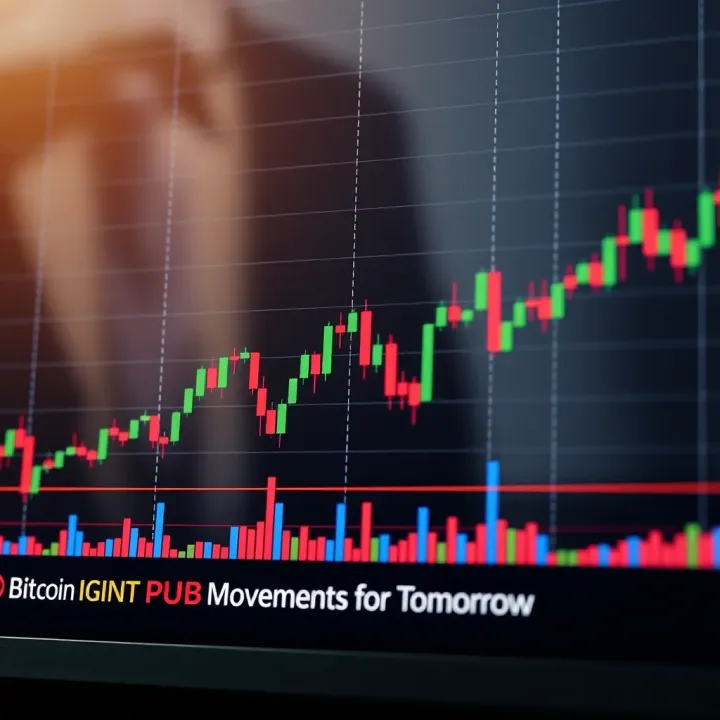
Understanding Bitcoin Price Movements for Tomorrow
📈 Understand Bitcoin price shifts for tomorrow using key market signals, analytics, and risk factors to make smarter investment choices in volatile conditions.
Edited By
Amelia Walsh
Predicting Bitcoin's price for tomorrow might seem like attempting to catch lightning in a bottle, but understanding what influences its short-term movement can give traders and investors a valuable edge. Bitcoin's price fluctuates continuously, influenced by a mix of technical, market, and external factors.

Market Sentiment: Traders' moods can swing prices sharply. For example, rumours about regulatory crackdowns can trigger panic selling.
Technical Indicators: Tools like Moving Averages (MA), Relative Strength Index (RSI), and volume trends offer clues about possible price direction in the near term. These indicators help identify whether Bitcoin is overbought or oversold.
News and Global Events: Announcements from governments, major companies adopting or rejecting Bitcoin, or geopolitical tensions can sway short-term prices.
Consider the recent case where a leading exchange announced increased Bitcoin custody services, spurring a quick uptick in demand on the same day. Such events can trigger short bursts of buying activity, affecting tomorrow’s price.
Understanding these factors separately and in combination is essential. Price moves rarely happen due to one cause alone.
Traders often combine:
Technical Analysis: Using chart patterns and statistical tools to spot probable market moves.
Fundamental Scanning: Keeping track of news feeds, official policy statements, and corporate developments.
Volume Analysis: Observing trading volume spikes, which often precede major moves.
By watching how these elements interact, one can better anticipate Bitcoin’s short-term trends.
If you’re planning to trade or invest for the short term, paying attention to:
Sudden news bursts from big market players like SEBI or RBI-related statements on cryptocurrencies.
Technical signals indicating reversals or continuation patterns.
Market sentiment shifts on social media or crypto forums.
can help avoid surprises and inform smarter decisions.
In the next sections, we’ll explore these influences more deeply to help you craft an informed approach to Bitcoin’s short-term price behaviour.
To predict Bitcoin's price tomorrow accurately, understanding the key factors that drive its short-term movement is essential. Traders and investors rely on these components to make informed decisions, monitor risks, and seize quick opportunities. Bitcoin's price often swings thanks to the delicate balance of demand and supply, government regulations, and the behaviour of big market players like institutional investors.
Bitcoin's price is highly sensitive to changes in demand and supply. When more buyers enter the market—whether retail investors or traders—increased demand pushes prices up. Conversely, if many holders decide to sell their coins simultaneously, supply overshadows demand, causing prices to fall. For example, during a popular festival sale like Diwali, increased online activity might encourage more investment flows, raising Bitcoin’s demand temporarily. Likewise, sudden sell-offs triggered by profit booking or fears can create rapid price declines. Monitoring order books on Indian crypto exchanges such as WazirX or CoinDCX can give real-time insights on market depth and demand-supply gaps.
Government rules and statements drastically influence short-term Bitcoin pricing. A sudden announcement from the Securities and Exchange Board of India (SEBI) regarding crypto regulations or taxation can fuel either buying frenzy or widespread panic. For instance, when the Reserve Bank of India (RBI) had earlier imposed banking restrictions on crypto investments, Bitcoin saw sharp volatility. Traders keep a close eye on official news and rumours, as even pre-announcement speculation causes price swings. The launch of clearer guidelines or positive remarks from the Indian Finance Ministry tends to boost confidence, whereas uncertainty or threats of bans cause cold feet among investors.
Institutional investors are increasingly shaping Bitcoin's price movements. Unlike retail investors, they trade in big volumes, which directly affects liquidity and price trends. For example, when global hedge funds or Indian asset management firms announce crypto exposure, markets often respond with upward momentum. Their entry also reduces market fragmentation, providing some stability in otherwise volatile trading days. On the flip side, institutional exits or profit-booking sessions can trigger steep drops. Indian traders watch announcements from funds or crypto-focused mutual funds, as these hint at forthcoming demand or supply surges.
Understanding these key factors—demand-supply shifts, regulatory environment, and institutional moves—gives you an edge when anticipating Bitcoin’s price tomorrow. Staying alert to changes in any of these can help you adjust your trading tactics quickly and avoid surprises.
Together, these elements offer practical signals for short-term price prediction. Keep your focus on real-time market data, official announcements, plus institutional signals to steer your Bitcoin trading strategy effectively.
Understanding recent price trends helps traders and investors grasp Bitcoin's immediate market behaviour. These trends offer clues on momentum and potential reversals, assisting in more informed predictions for tomorrow's price movement. Monitoring patterns over the past 24 hours reveals how demand and supply have shifted recently, which often signals the market’s near-future direction.

The past 24 hours provide crucial data on Bitcoin’s short-term swings. For example, if Bitcoin experienced several sharp gains during this period followed by quick corrections, it implies a tug-of-war between buyers and sellers. Recognising these patterns can guide traders on whether to expect continued momentum or a pullback tomorrow. Volume during these moves is another key factor—high trading volume with rising price tends to show genuine interest, while low volume rallies might lack conviction.
Consider a scenario where Bitcoin rose steadily over 24 hours but faced resistance around ₹30 lakh, causing it to retreat slightly. This resistance level may act as a short-term ceiling tomorrow, giving traders a point to watch for possible profit-booking or a breakout if buying pressure resumes.
Bitcoin’s price is well-known for rapid ups and downs, making volatility a vital consideration in short-term predictions. High volatility means prices can swing widely within hours, influenced by news, market sentiment, or even large trades. Traders use this volatility to their advantage but must also be aware that it raises the risk of unexpected losses.
Volatility indexes or measures like the Average True Range (ATR) help quantify price fluctuations, enabling better risk management. Indian traders, especially those relying on intraday strategies, often monitor volatility closely to adjust stop-loss levels or decide entry and exit points more precisely.
Short-term Bitcoin price action is like a moving target, with volatility and recent price shifts providing essential context for traders aiming to predict tomorrow.
By focusing on these recent price trends and volatility, traders can develop a clearer picture of short-term Bitcoin behaviour. This understanding reduces guesswork and supports more disciplined trading strategies aligned with current market dynamics.
Understanding technical indicators is essential for anyone looking to anticipate Bitcoin's price movement tomorrow. These indicators help traders and investors interpret market data, spotting patterns and signals that are not immediately obvious. They offer a framework to assess price momentum, trend strength, and possible turning points based on historical pricing and volume, which is especially useful given Bitcoin’s notorious volatility.
Moving averages smooth out price data to reveal trends more clearly, filtering out the noise caused by daily market fluctuations. For example, the 50-day moving average (short-term) compared to the 200-day moving average (long-term) often signals bullish or bearish momentum. When the short-term average crosses above the long-term average—a golden cross—it often indicates rising prices, suggesting that tomorrow’s price might go up. Conversely, a death cross, where the short-term average dips below the long-term, warns of potential decline.
Traders often rely on simple moving averages (SMA) or exponential moving averages (EMA). EMAs give more weight to recent prices, responding faster to price changes—advantageous when predicting short-term movements as in the case of tomorrow’s price.
The RSI helps gauge how overbought or oversold Bitcoin is by comparing the magnitude of recent gains to recent losses on a scale from 0 to 100. An RSI above 70 typically suggests overbought conditions, indicating a possible price pullback soon, while readings below 30 suggest oversold levels, potentially signalling an upward bounce.
Momentum analysis using RSI alerts traders when momentum is shifting. For instance, if Bitcoin’s RSI shifts from 65 to above 70, it may hint that the price could hit resistance tomorrow. Combining RSI with other indicators improves prediction reliability.
Volume reveals the strength behind price moves. A price rise accompanied by increasing volume shows strong buying interest, which often sustains the trend, while a price move on low volume might lack conviction and reverse quickly.
Monitoring intraday volume spikes can help predict whether tomorrow’s Bitcoin price will continue its trend or face resistance. For example, a sudden increase in buying volume after a dip may indicate a strong support level and price recovery tomorrow. On the flip side, unusually high selling volume might hint at downward pressure.
Technical indicators like moving averages, RSI, and volume are practical tools that can sharpen your view of Bitcoin's short-term price movement. Still, no single indicator guarantees certainty, so analysing multiple signals together provides a better edge.
In sum, these technical tools equip traders with data-driven insights into Bitcoin’s price shifts, helping manage risk and seize opportunities in a market that can change course swiftly and without much warning.
Global events and news often influence Bitcoin's price within a very short window, sometimes leading to sharp movements even within the next trading day. For traders and investors aiming at short-term positions, staying alert to such developments is essential. News acts like a trigger, altering market sentiment and prompting rapid buy or sell reactions.
Geopolitical events like conflicts, sanctions, or diplomatic tensions often disrupt traditional markets but can also spill over into crypto markets. For example, when tensions flare up between major economies, investors sometimes seek refuge in Bitcoin, viewing it as a non-sovereign asset outside government control. However, this flight to safety can swing in either direction based on the nature of the event.
Take the Russia-Ukraine conflict; in its early stages, Bitcoin saw increased volatility as sanctions on Russia unsettled global markets. Traders watching this could spot opportunities based on sudden demand shifts. Similarly, regulatory crackdowns in one country can trigger panic sells or short-term dips worldwide, as seen when China intensified crypto bans.
Monitoring diplomatic releases, sanctions announcements, or unexpected conflicts can give traders an edge in anticipating Bitcoin's price swings tomorrow.
Economic data like inflation rates, employment figures, or GDP growth regularly impact investor confidence and indirectly influence Bitcoin's price. For example, when India's Consumer Price Index (CPI) shows higher inflation than expected, the Reserve Bank of India (RBI) might hint at rate hikes. This can make investors cautious, leading to short-term dips in risk assets including cryptocurrencies.
Monetary policies from major central banks like the RBI, US Federal Reserve, or European Central Bank also dramatically affect Bitcoin's short-term price. An unexpected interest rate hike can make traditional savings more attractive and reduce appetite for riskier assets, causing a dip in Bitcoin prices. Conversely, dovish policies signalling lower rates and liquidity injections often boost Bitcoin demand.
In April 2024, when the RBI kept repo rates unchanged amid global uncertainty, Bitcoin saw some price stability as investors weighed the implications. Traders tracking these policy decisions can better time entry or exit points based on anticipated shifts in liquidity and risk appetite.
Staying updated on geopolitical developments and economic indicators isn't just helpful—it can be the difference between smart decision-making and costly surprises in Bitcoin trading.
In summary, global events and news act as powerful influencers on Bitcoin's short-term price movements. Traders should integrate real-time alerts on geopolitical tensions and economic updates with other technical signals to navigate tomorrow’s volatile market landscape effectively.
Predicting Bitcoin's price for the short term involves inherent challenges that traders and investors must recognise. Unlike traditional assets, Bitcoin's price is highly sensitive to sudden market shifts and external developments. Understanding these limitations prepares you for the unpredictability that comes with making tomorrow's price predictions.
Bitcoin's volatility remains its defining feature and biggest hurdle for accurate short-term forecasting. Extreme price swings can occur within minutes, driven by a handful of large trades or sudden shifts in investor sentiment. For example, a single whale (large holder) selling a substantial amount can cause the price to drop sharply, rendering technical indicators obsolete in a flash. Unlike equities or commodities, Bitcoin often reacts more dramatically to market noise rather than fundamentals, making it tricky to rely solely on charts or past data.
This volatility means that predictions focusing on next-day prices can often miss unexpected reversals. Traders must keep in mind that while patterns like moving averages or RSI offer clues, they do not guarantee tomorrow's movements. Preparing for sudden shifts by setting stop losses and maintaining flexible strategies proves helpful in such a dynamic environment.
Bitcoin's price is also heavily influenced by events outside normal market behaviour, which can disrupt predictions immediately. Regulatory announcements from countries like the US, China, or India can cause sharp price swings within hours. For instance, when India proposed tighter cryptocurrency rules, markets saw rapid fluctuations as traders scrambled to anticipate impacts. Similarly, tweets by influential figures or hacks on exchanges can lead to unpredictable crashes or rallies.
Economic indicators like inflation data or Reserve Bank of India's monetary policy decisions can indirectly impact Bitcoin as investors seek alternative stores of value. Global geopolitical tensions—like conflicts or sanctions—may also spike demand unpredictably. Such external factors seldom follow patterns and often catch traders off guard when predicting prices for the next day.
Being aware of these limitations helps you avoid overconfidence in any single prediction model. Using a mix of risk management, staying updated on news, and keeping track of market sentiment are key to navigating Bitcoin’s uncertain short-term future.
In summary, while predicting Bitcoin's price for tomorrow provides useful guidance, the market's extreme volatility and unpredictable external events create risks that require caution. Traders should integrate these insights with disciplined strategies to handle surprises and protect their investments effectively.
Applying Bitcoin short-term price predictions effectively can give traders a meaningful edge in the market. Since Bitcoin is known for its rapid price swings, practical approaches based on informed predictions help traders make decisions with a clearer view of potential risks and rewards.
Using short-term price predictions should never be about blind faith; instead, traders should view these as one piece of the puzzle. For instance, if moving averages and other technical signals suggest a likely price rise tomorrow, a trader might choose to buy early and set a target to sell within hours or by day-end. Conversely, if predictions point to a dip—perhaps due to expected regulatory news—traders could plan to sell or even short sell to capitalise on the drop.
Consider how a trader following price signals might have profited during recent high-volatility phases. Say Bitcoin’s Relative Strength Index (RSI) indicates it’s overbought—this could mean a pullback is due soon. Acting on this, a trader sells their holding today to avoid losses tomorrow. This real-time use of prediction tools helps to manage positions actively rather than react after the market has moved.
Using predictions is also about combining them with personal risk tolerance and goals. Not every predicted movement warrants action; for example, if the expected change is minor or the trader’s position is already exposed, cautious waiting might be wiser.
Short-term Bitcoin trading demands sharper risk management than longer-term investing because of the asset’s notorious volatility. One key approach is setting stop-loss orders. If Bitcoin’s price drops below a certain level, the stop-loss ensures the trader exits automatically, limiting losses. Traders must decide stop-loss points based on volatility levels; a tight stop-loss might get triggered too often in volatile times, whereas a wide one can expose the trader to bigger losses.
Diversification is another tactic even for short-term traders. Spreading capital across other cryptocurrencies or assets can reduce risk concentration. For example, someone trading Bitcoin might also hold small positions in Ethereum or gold ETFs to balance sudden Bitcoin price swings.
Position sizing is crucial too. A good rule here is never to risk more than 1–2% of total trading capital on a single trade. Overexposure can wipe out months of gains within minutes if markets turn sharply. Following daily loss limits, like stepping back after losing a preset amount, prevents emotional decisions driven by frustration or fear.
Remember, even the best predictions can fail due to unexpected events. Having a risk plan actively reduces damage and helps traders stay in the game longer.
In essence, using Bitcoin’s short-term price predictions effectively requires a combination of informed decision-making and strict risk controls. Traders who balance these often find better consistency, especially in India's increasingly active cryptocurrency market.
📈 Understand Bitcoin price shifts for tomorrow using key market signals, analytics, and risk factors to make smarter investment choices in volatile conditions.

Explore Bitcoin price prediction for 2040 📈, analysing its history, market trends, expert views, and key factors shaping its value for Indian investors.

📈 Explore Dogecoin's price forecast for tomorrow, including market trends, expert views, risks, and key indicators that can shape its value for savvy investors.
📈 Track today's Bitcoin (BTC) price trends with expert analysis, key indicators, and insights tailored for Indian investors navigating this volatile crypto market.
Based on 7 reviews